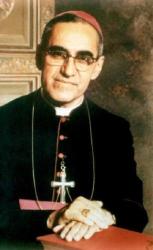
Pierre Cauchon
 France
- Pierre Cauchon, Bishop of Beauvais and Rouen
- Academic and Ecclesiastical Career
- Political Influence and Diplomatic Role
- Trial of Joan of Arc
- Legacy and Historical Controversies
- Later Years and Death
Pierre Cauchon, Bishop of Beauvais and Rouen
Early Life and EducationPierre Cauchon's lineage can be traced back to the twelfth century. He was born into a wealthy family of merchants and jewelers in Reims, where his father served as a magistrate. Cauchon's mother's identity remains uncertain, as does the precise genealogy of his family.
Cauchon received an education in grammar and Latin in his hometown before moving to Paris around 1385. He enrolled in the Collège de Navarre, where he earned a Master of Arts degree and subsequently studied canon law, receiving a licentiate degree in 1397 or 1398.
Academic and Ecclesiastical Career
Cauchon's academic career progressed rapidly. He was elected Rector of the University of Paris in 1397 and served in that capacity for two terms. In 1398, he began pursuing a degree in theology, but ultimately did not complete the eight-year program of study.
Political Influence and Diplomatic Role
Despite his extensive academic pursuits, Cauchon's true calling lay in politics. He became a trusted advisor and confidant of the Burgundian Duke Philip the Good. In this capacity, he played a key role in negotiations and diplomacy during the Hundred Years' War.
Trial of Joan of Arc
Appointment as InquisitorIn 1430, Cauchon was appointed as the Bishop of Beauvais and became the chief inquisitor in the trial of Joan of Arc. He presided over the hearings and interrogated Joan, ultimately condemning her as a heretic who should be burned at the stake.
Legacy and Historical Controversies
The legacy of Pierre Cauchon is a subject of ongoing debate among historians. Some view him as an ambitious and ruthless prosecutor who played a decisive role in Joan of Arc's execution. Others argue that he was a man of his time, adhering to the beliefs and practices of the church in his day.
Later Years and Death
After the trial of Joan of Arc, Cauchon became the Bishop of Lisieux in 1432. He continued to serve in this role until his death in 1442. Despite his involvement in a highly controversial event, Cauchon's later years were relatively quiet, and he is often remembered as a skilled diplomat and a capable administrator.