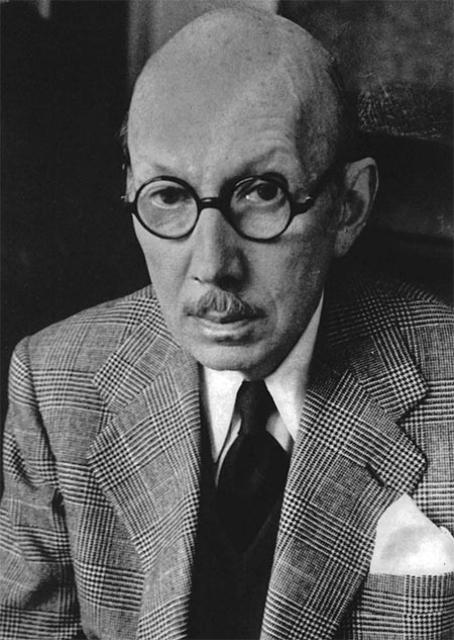
Pierre Jean Jouve
 France
- Biography of Pierre Jean Jouve
- World War I and Pacifism
- Themes and Works
- Influence and Later Works
- Emigration and Resistance
- Later Years and Legacy
Biography of Pierre Jean Jouve
Pierre Jean Jouve was a French poet, novelist, essayist, and translator. He was born with fragile health and had a strong attachment to his mother, who was a music teacher, and his younger sister. In the early 20th century, he became close to the Unanimism movement, particularly the group called "L'Abbaye". As an artist, Jouve was influenced by Rene Ghil and Julien Romane, and he mastered vers libre in his poetic compositions. He believed that love and compassion towards others were the meaning and justification of life.
World War I and Pacifism
During World War I, Jouve actively participated in the pacifist movement led by Romain Rolland. He later wrote a monograph titled "Vivant R. Rolland" (1920) about Rolland. His pacifist sentiments can be found in his books "Tragic Poems" (1922) and "Hospital" (1927). Like all the followers of Rolland, he was greatly influenced by Leo Tolstoy. While he welcomed the Russian Revolution as a herald of a "new era," he did not turn a blind eye to the repressions in Soviet Russia.
Themes and Works
The motifs of Jouve's works revolve around love and compassion for the oppressed and humiliated, sometimes leading to protest against the injustices of bourgeois society. His bright dreams of the future are combined with a painful pessimism, as seen in his collections of poems ranging from "Presence" (1912) to "Sentimental Voyage" (1923). In 1925, he experienced a spiritual crisis and religious conversion, erasing everything he had written until that point.
Influence and Later Works
Jouve was one of the first writers to embrace the discoveries of psychoanalysis, combining them with the revelations of European mystics such as St. Francis of Assisi, St. Teresa, San Juan de la Cruz, and Catherine of Siena, as well as the explorations of Holderlin, Kierkegaard, Nerval, Baudelaire, Rimbaud, and Mallarme. A significant underlying theme in Jouve's poetry and prose is the mythology of the feminine, often referred to as the "search for the hidden Helen" by contemporary researchers. This theme is reflected in his novels "Paolina 1880" (1925), "Vagabonds" (1931), and "Bloody Stories" (1932), as well as in his poetry collections "Marriages" (1928), "Bloody Sweat" (1934), "Celestial Matter" (1937), and "Have Mercy, O Lord" (1938).
Emigration and Resistance
During World War II, Jouve spent his years in exile in Switzerland. However, his poetry collection "Notre-Dame de Paris" (1944) and his essays were at the heart of the intellectual Resistance. After the war, Charles de Gaulle referred to him as the "unique translator of the French soul throughout these last years" in a telegram on May 12, 1945.
Later Years and Legacy
In his later works, Jouve's writings were permeated with reflections on the fate of individuals caught in the catastrophes of the century, which he saw as premonitions of the Apocalypse. His collections of poems "Diadem" (1949) and "Lyrical" (1956) explore these themes. In his final years, he focused on writing memoirs.


