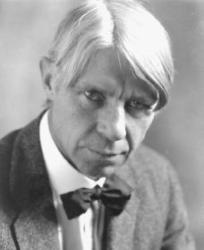
Robert Louis Stevenson
 Great Britain
Robert Louis Stevenson: A Biography
Robert Louis Stevenson, an English writer best known for his novel "Treasure Island," was born on November 13, 1850, in Edinburgh. After finishing school, he attended the University of Edinburgh and studied law, although he never practiced as a lawyer. From 1873 to 1879, Stevenson lived primarily in France, earning meager income as an aspiring writer and receiving occasional financial support from home.
During this time, he embarked on a canoe trip along the rivers of France, which he later wrote about in his first published book, "An Inland Voyage" (1878). He also undertook a walking trip, described in "Travels with a Donkey in the Cévennes" (1879). It was in the village of Grez, a gathering place for artists, where he met Frances Matilda (Van de Grift) Osbourne, an American painter ten years his senior. After her divorce, Stevenson and Frances married on May 19, 1880, in San Francisco. Their life together was marked by Frances's unwavering care for her ailing husband. Stevenson formed a close bond with her children, and his stepson, Samuel Lloyd Osbourne, became his co-author for three books: "The Wrong Box" (1889), "The Ebb-Tide" (1894), and "The Wrecker" (1892).
In 1880, Stevenson was diagnosed with tuberculosis. In search of a healing climate, he traveled to Switzerland, southern France, Bournemouth (England), and Saranac Lake, New York, in 1887-1888. Due to his poor health and to gather material for his writings, Stevenson, along with his wife, mother, and stepson, embarked on a yacht journey to the South Pacific. They visited the Marquesas Islands, Tuamotu, Tahiti, Hawaii, Micronesia, and Australia, eventually acquiring land in Samoa, where they decided to settle for an extended period. He named their property Vailima (Five Rivers) to reflect its location.
The climate of the island proved beneficial to Stevenson's health, and it was in the spacious plantation house at Vailima that he wrote some of his best works. On December 3, 1894, he passed away suddenly. Stevenson's Samoan admirers buried him atop a nearby mountain, with his gravestone bearing the words from his famous "Requiem" poem ("Under the wide and starry sky"). The success of Stevenson's well-known books can be attributed, in part, to the captivating themes they explore, such as pirate adventures in "Treasure Island" (1883), horror fantasy in "The Strange Case of Dr. Jekyll and Mr. Hyde" (1886), and the joy of childhood in "A Child's Garden of Verses" (1885).
However, in addition to these merits, his rapid character sketches, the dense prose of "Dr. Jekyll and Mr. Hyde," and the sparkling irony of "A Child's Garden of Verses" demonstrate the versatility of his talent. Stevenson began his literary career with highly regarded essays written in an informal style, and he consistently adhered to this genre. His articles on writers and the art of writing, such as "A Humble Remonstrance" (1884), "Dreams" (1888), and "On Some Technical Elements of Style in Literature" (1885), parallel the work of Henry James.
His travel notes, including "Travels with a Donkey," "The Silverado Squatters" (1883), and "In the South Seas" (1890), expertly capture the local atmosphere and are of particular interest to researchers. Stevenson's lesser-known literary anecdotes rank among the sharpest, wittiest, and most concise in English literature. He wrote poetry sporadically and rarely took it seriously. To fully immerse oneself in the world of Stevenson's works such as "Kidnapped" (1886) and its sequel "Catriona" (1893), "The Master of Ballantrae" (1889), "The Merry Men" (1882), and "Thrawn Janet" (1881), a reader would benefit from at least a superficial knowledge of the language and history of Scotland. With the exception of "Thrawn Janet," a small gem in the genre of ghost stories, these works are unevenly written.
"The Black Arrow" (1883) and "St. Ives" (1897) can be categorized as obvious failures. "The Wrong Box" and "The Suicide Club" (1878), as well as the stories that follow them (some co-written with Fanny), may not appeal to all readers. However, "The Beach of Falesa" remains one of the finest stories ever written about the South Seas, and the often-published island fantasies "The Bottle Imp" (1891) and "The Isle of Voices" (1893) are extremely captivating. It is widely believed that "Weir of Hermiston" (1896) could have become one of the great novels of the 19th century, but Stevenson only managed to complete a third of the book.