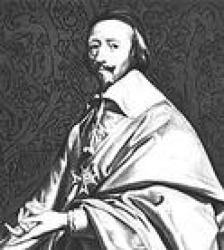
Pietro Carnesecchi
 Italy
Italy- Early Life and Education
- Entry into the Papal Curia
- Influence of Spanish Reformers
- Religious Thought and Influence
- Flight and Advocacy for Reform
- Trials and Execution
Early Life and Education
Pietro Carnesecchi was born in Florence, the son of Andrea Carnesecchi, a prosperous merchant who rose to prominent positions in the papal court under the patronage of the Medici, particularly Pope Clement VII. Pietro's mother's uncle was Cardinal Bernardo Dovizi, who introduced him to the emerging reformist ideas of the time.
Entry into the Papal Curia
At the age of 25, Carnesecchi became a notary and pro-notary of the Curia, as well as the pope's first secretary, responsible for correspondence with nuncios, including Pietro Paolo Vergerio in Germany.
Influence of Spanish Reformers
In Marseille, he met Francis I and gained favor with Catherine de Medici and other influential figures at the French court. He became a close associate of the Spanish reformer Juan de Valdes and friends with Bernardino Ochino and Giulia Gonzaga, whose spiritual mentor he became after Valdes' death. He also befriended Vittoria Colonna.
Religious Thought and Influence
Under Valdes' influence, Carnesecchi embraced Luther's doctrine of justification by faith, while rejecting the idea of schism. He became a leader of a literary and religious circle that gathered in Naples around Valdes, interested in the reform of the Church.
Flight and Advocacy for Reform
As the Inquisition cracked down on these sentiments, Carnesecchi came under scrutiny. He found refuge with friends in Paris and from 1552, in Venice, where he led a party advocating for reform within the city.
Trials and Execution
In 1557, Carnesecchi was summoned to Rome for a tribunal but refused to attend. The death of Pope Paul IV and the pontificate of Pius IV eased his situation, and he lived in Rome. However, the accession of Pius V in 1565 saw renewed and intensified persecution by the Inquisition.
When news reached Carnesecchi in Venice, he traveled to Florence, believing himself safe, but Duke Cosimo I Medici betrayed him, seeking the pope's favor. He was imprisoned from July 1566 for over a year. On September 21, 1567, he was sentenced to death.
The records of Carnesecchi's trial provide valuable insights into the Italian Reformation, as many of his associates in Rome and Viterbo were also condemned by the tribunal, some posthumously. In total, 17 people were convicted in the case, with 15 sentenced to life imprisonment on galleys, while Carnesecchi and his brother Giulio Mareso were beheaded and burned on the Bridge of Sant'Angelo on October 1, 1567.