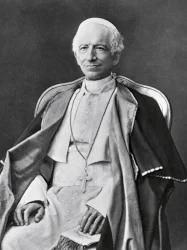
Pius XI
 Kingdom of Italy, Vatican City
Pope Pius XI led the Catholic Church through an era of social upheaval and rising authoritarianism. A scholar and experienced church diplomat, he is best known for the 1929 agreement that created Vatican City as an independent state. His pontificate also brought sharp conflicts with Mussolini’s Italy and Nazi Germany, as he tried to protect the Church’s institutions while confronting governments that sought to control public life.
A scholar enters church diplomacy
Born Achille Ratti in Desio, near Milan, on May 31, 1857, he was ordained a priest in 1879. Ratti pursued scholarly work in theology and history and spent many years at Milan’s Ambrosian Library, eventually becoming its prefect. A keen mountaineer, he was known for combining intellectual discipline with a taste for difficult climbs.
In 1911, he moved to the Vatican Library, where he became prefect. During and after the First World War, he entered the Church’s diplomatic service. He was sent to Poland as papal representative in 1918, witnessing the challenges facing a country emerging from war and political upheaval. In 1921 he became archbishop of Milan and a cardinal. The following year, he was elected pope and took the name Pius XI.
The Lateran settlement
One of his most consequential achievements came in 1929, when the Holy See and Benito Mussolini’s Italian government signed the Lateran Pacts. The agreements resolved the long-running dispute over the pope’s status after the loss of the Papal States. They established Vatican City as an independent state, recognized the Kingdom of Italy with Rome as its capital, and included a concordat and financial settlement.
The agreement secured territorial independence for the papacy, but it also gave Mussolini’s regime a major diplomatic success. Relations soon became strained. Pius objected when the Fascist government tried to restrict Catholic youth groups and other Church activities. He maintained that the Church had a right to educate and organize its members beyond the state’s reach.
Confronting totalitarian ideologies
Pius XI addressed questions of labor, society, and political power in his encyclicals. In Quadragesimo Anno (1931), he revisited social teaching on economic justice and the responsibilities of employers and workers. Later, as authoritarian movements grew, he issued a series of condemnations. Non abbiamo bisogno criticized aspects of Italian Fascism, while Mit brennender Sorge, issued in 1937 and read in German churches, rejected Nazi racial ideology and the regime’s claims over religious life. Divini Redemptoris condemned atheistic communism.
These interventions did not remove the compromises of Vatican diplomacy or halt persecution. They show a pope attempting to defend religious institutions while confronting states that increasingly demanded total loyalty. Pius XI died in the Vatican on February 10, 1939, as Europe moved toward another war. His legacy rests both on the sovereignty secured by the Lateran settlement and on the Church’s public clashes with the dictatorships of his time.