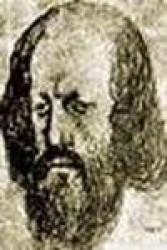
Plutarch
 Greece
Biography of Plutarch
Plutarch was a Greek philosopher and biographer. He was born into a wealthy family in a small town in Boeotia. He studied mathematics, rhetoric, and philosophy in Athens, primarily under the Platonist Ammonius, but also had significant influences from the Peripatetics and Stoics. He was an eclectic philosopher, with a focus on the practical application of philosophy. In his youth, he traveled extensively, visiting Greece, Asia Minor, Egypt, and Rome, where he met with Neoplatonists and formed friendships with many notable individuals, including Lucius Mestrius Florus, a close associate of Emperor Vespasian, who helped Plutarch obtain Roman citizenship. However, Plutarch eventually returned to his hometown of Chaeronea, where he served his city in various civic positions. He gathered the youth in his home, creating a kind of "private academy" where he acted as a mentor and lecturer. At the age of fifty, he became a priest of Apollo in Delphi, aiming to restore the sanctuary and oracle's former significance.
Plutarch was not an original writer. Instead, he collected and processed the works of other, more original writers and thinkers who came before him. However, his treatment of these works, marked by his own personality, gave them a new form that influenced European thought and literature for centuries. Plutarch had a wide range of interests, mainly revolving around family life, Greek city-states, religious issues, and friendship. This wide range of interests is reflected in his numerous works, of which less than half have survived. It is challenging to establish their chronology. Thematically, they can be divided into two groups: the first, highly diverse group consists of works created at different times, mostly philosophical and didactic, collectively known as "Morals" (Moralia); the second group consists of biographies (usually referred to by their Latin titles). The "Morals" include approximately 80 works. The earliest ones are rhetorical in nature, such as praises to Athens, discussions on Fortune and its role in the life of Alexander the Great or in the history of Rome. There are also popular philosophical treatises, with one of the most characteristic being a small work titled "On the Decline of Oracles". Other works provide advice on how to live a happy life and overcome flaws, such as "On Excessive Curiosity" and "On Talkativeness" or "On Excessive Shyness". Plutarch also explored the topics of love and marriage. These works reflect Plutarch's pedagogical interests, as he also addressed similar issues in his work "How a Young Person Should Listen to Poets" and "How to Make Use of Lectures", among others. Thematically related to these works are Plutarch's political treatises, particularly those that provide recommendations for rulers and statesmen. Plutarch also wrote consolation works, including a comforting piece addressed to his wife Timoxena, who had lost their only daughter.
Alongside the most popular dialogues and discussions, there are other works in the "Morals" that are closer to scientific reports. In these works, Plutarch provides valuable information on the history of philosophy without delving too deeply into theoretical arguments. Some of these include writings on Plato's teachings, such as "Platonic Questions" and "On the Creation of the Soul in the 'Timaeus'". Plutarch also wrote polemical works against Epicureans and Stoics. He delved into the human soul and showed an interest in psychology, possibly even the psychology of animals, as seen in his works on the intelligence and reasoning of animals. Plutarch devoted numerous works to religious topics, including the so-called "Pythian" dialogues, which discuss the oracle of Apollo in Delphi.
One of the most interesting works in this group is "On Isis and Osiris". In this work, Plutarch, who himself was initiated into the mysteries of Dionysus, presents various syncretic and allegorical interpretations of the Osiris mysteries. Plutarch also demonstrated his interest in ancient customs through his works "Greek Questions" and "Roman Questions", which explain the significance and origins of various Greek and Roman customs (with a focus on religious practices). His work "On the Face on the Moon" presents various theories about this celestial body, with Plutarch ultimately endorsing the theory accepted in Plato's Academy, suggesting that the Moon is the homeland of demons. Plutarch's personal interests, which are prominently displayed in his biographies, are also reflected in his collection of Spartan proverbs (another collection of famous sayings, "Apophthegmata", is mostly considered non-authentic). Various topics are explored in dialogue form in works such as "The Symposium of the Seven Sages" or "Conversations at Dinner" (in 9 books). The "Morals" also include non-authentic works by unknown authors. The most important of these are "On Music", which is one of the primary sources of our knowledge of ancient music (by Aristoxenus and Heraclides Ponticus), and "On the Education of Children", a widely known work that has been translated into many languages since the Renaissance. However, Plutarch owes his fame not to the "Morals" but to his biographies.
Plutarch dedicated his life to public and political activities, primarily in the field of education. He made every effort to showcase the cultural significance of Greece. Until the end of antiquity and in Byzantium, Plutarch enjoyed a great reputation as the greatest educator and philosopher. During the Renaissance (15th century), his rediscovered works, translated into Latin, once again became the foundation of European pedagogy. The treatise "On the Education of Children" was particularly popular during this period, as it was considered authentic until the beginning of the 19th century.