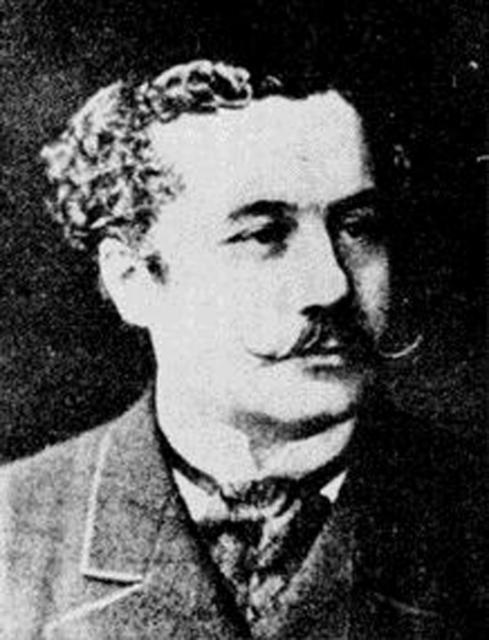
Pol Emil Buabodran
 France
- Paul Émile Lecoq de Boisbaudran
- Chemical Career
- Spectroscopy and the Discovery of Gallium:
- Contributions to Rare Earth Chemistry
- Later Years
Paul Émile Lecoq de Boisbaudran
Early Life and EducationBorn in the town of Cognac, France, Paul Émile Lecoq de Boisbaudran received his education through self-study by following the curriculum of the Polytechnic School.
Chemical Career
Winemaking and Chemical Research:In 1854, Lecoq de Boisbaudran joined his father's winemaking business in Cognac. It was here that he established a well-equipped chemical laboratory and conducted his research.
Spectroscopy and the Discovery of Gallium:
In 1875, Lecoq de Boisbaudran collaborated with Charles Wurtz in Paris. His work focused on studying and classifying the spectra of inorganic substances. In 1875, he discovered a new element in a Pyrenean zinc blende, which he named gallium. This discovery fulfilled a prediction made by Dmitri Mendeleev in 1870. For this achievement, Mendeleev hailed Lecoq de Boisbaudran as the "strengthener of the Periodic Law."
Contributions to Rare Earth Chemistry
Lecoq de Boisbaudran played a significant role in advancing the field of rare earth chemistry. Utilizing spectroscopic techniques, he discovered the elements samarium (1879), gadolinium, and dysprosium (1886).
Later Years
After 1895, Lecoq de Boisbaudran's scientific activities diminished due to ill health. He became a corresponding member of the Paris Academy of Sciences in 1878.


