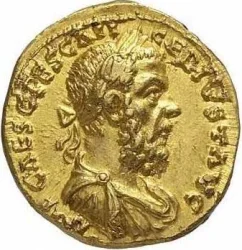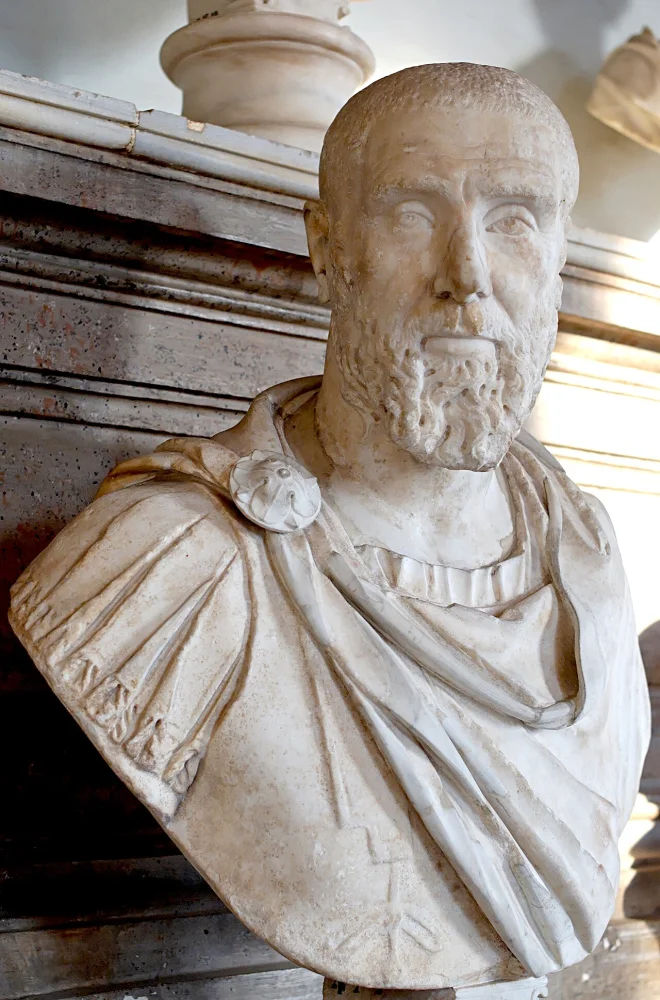
Pupienus
Pupienus was a Roman emperor who ruled jointly with Balbinus for a few months in 238, during the upheaval known as the Year of the Six Emperors. Chosen by the Senate to oppose Maximinus Thrax, he had a distinguished career in public office and military command. Their regime defeated the immediate threat from Maximinus but failed to win the lasting support of Rome’s people and Praetorian Guard. Both emperors were killed by the Guard, leaving the throne to the young Gordian III.
A senator chosen in a crisis
Pupienus, whose full name was Marcus Clodius Pupienus Maximus, was born around the middle of the second century. The surviving sources offer limited information about his early life, but he had held several important offices, including the governorship of provinces and the urban prefecture of Rome. His administrative and military experience made him a prominent candidate when the empire entered crisis in 238.
After the rebellion of Gordian I and Gordian II against Maximinus Thrax collapsed, the Senate still refused to accept Maximinus’ rule. It selected Pupienus and Balbinus as joint emperors. A public outcry in Rome prompted the Senate to name Gordian III, grandson of Gordian I, as Caesar and junior partner, helping secure support from the population.
Confrontation with Maximinus
Pupienus took command of the effort to stop Maximinus, who was advancing into Italy. He established a base at Ravenna while Maximinus besieged Aquileia. The city resisted, supply problems weakened the invading army, and Maximinus’ own soldiers eventually murdered him and his son.
With the main military threat gone, Pupienus returned to Rome. His success did not resolve tensions within the new government. The joint emperors had different political followings, and the Praetorian Guard resented being sidelined by the Senate’s choice and the use of other troops.
Murder by the Praetorian Guard
In the summer of 238, members of the Praetorian Guard seized Pupienus and Balbinus in the imperial palace. The two emperors were dragged away and killed. The precise sequence and motives are uncertain, but the killings reflected the fragile balance of power between the Senate, the army and the people of Rome.
Gordian III, still a teenager, became the sole emperor. The events of 238 showed how quickly senatorial authority could be undermined when it lacked reliable military backing.
Legacy
Pupienus’ reign was too brief to leave a durable administrative program, and much of his reputation comes from the dramatic context of his accession and death. He was one of several rulers elevated during a year of civil conflict, rebellion and military intervention.
His story illustrates a recurring challenge of the third-century Roman Empire: political legitimacy depended on the Senate, but emperors also needed the loyalty of soldiers and the support of the capital. Pupienus’ victory over Maximinus could not secure either for long.