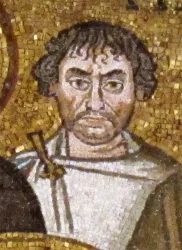
Pyotr Bagration
- From a Georgian family to the Russian army
- Campaigns under Suvorov and against Napoleon
- The invasion of 1812
- A soldier’s enduring reputation
Pyotr Bagration was one of the Russian army’s most admired commanders during the Napoleonic Wars. A prince of Georgian descent who began his career as an ordinary soldier, he rose through decades of campaigning to command a major Russian army against Napoleon’s invasion in 1812. His leadership at Borodino, where he was mortally wounded, made him a lasting symbol of resistance in Russia and Georgia.
From a Georgian family to the Russian army
Pyotr Ivanovich Bagration was born in July 1765 in Kizlyar, in the North Caucasus, into a noble Georgian family descended from the Bagratid royal line. The family’s prestige did not bring him a powerful patron or an easy path to advancement. In 1782, he entered the Russian army as a sergeant in an infantry regiment, beginning a career that would span three decades.
Bagration saw action in the Russo-Turkish War and distinguished himself during the 1788 siege of Ochakov. He also fought in the Polish campaigns of the 1790s. His ability in the field brought him to the attention of Alexander Suvorov, one of Russia’s leading commanders. Suvorov valued Bagration’s courage and made him a trusted subordinate.
Campaigns under Suvorov and against Napoleon
Bagration served in Suvorov’s Italian and Swiss campaigns of 1799, fighting in a series of demanding operations against French forces. Often placed at the head of advance or rear guards, he gained a reputation for persistence in difficult circumstances. He later commanded Russian troops in the wars against Napoleon, including the 1805 campaign that culminated in the defeat at Austerlitz.
In the 1807 campaign, Bagration fought at Eylau and Friedland, again earning recognition for his battlefield leadership. He also served in campaigns against Sweden and the Ottoman Empire. Across these conflicts, he became known as an energetic commander whose troops could be relied upon during hard fighting.
The invasion of 1812
When Napoleon invaded Russia in 1812, Bagration commanded the Second Western Army. The Russian forces faced a much larger French-led invasion force, and their armies initially risked being separated. Bagration’s troops withdrew eastward under pressure, maneuvering to avoid encirclement and eventually joining the main Russian army. His army fought at Mogilev, then continued to link up with forces commanded by Mikhail Kutuzov.
At the Battle of Borodino on 7 September 1812, Bagration led the Russian left wing in the fierce struggle around a series of earthworks later known as the Bagration fleches. He was struck by a shell fragment or other artillery debris and suffered a severe wound to the leg. The Russian army withdrew from the battlefield, but the cost to the French was immense, and the battle became a defining moment of the campaign.
Bagration was evacuated from the field and taken to an estate in the Vladimir region. His wound became infected, and he died on 24 September 1812, before Napoleon’s retreat from Moscow. In 1839, his remains were reinterred at the Borodino battlefield, commemorating the commander at the site where he had been gravely wounded.
A soldier’s enduring reputation
Bagration’s military skill and personal courage made him a popular figure among Russian troops and a respected opponent to Napoleon. His career rose from service in the ranks rather than court privilege, and his conduct in the 1812 invasion helped define the Russian army’s resistance. His death shortly after Borodino connected his name permanently with the campaign.
Today Bagration is remembered as a national hero in Russia and Georgia. His legacy is reflected in military histories, monuments, and the name given to the offensive launched by the Soviet Union in 1944. His life tells the story of a gifted field commander whose long service ended at the very battle that secured his place in history.