Rabia and Rukia
 Bangladesh
- The Siamese Twins Rabia and Rukia
- Taslima's Pregnancy and Birth
- Discovering the Condition
- The Hope for Separation
- The Challenging Journey
- The Financial Struggle
The Siamese Twins Rabia and Rukia
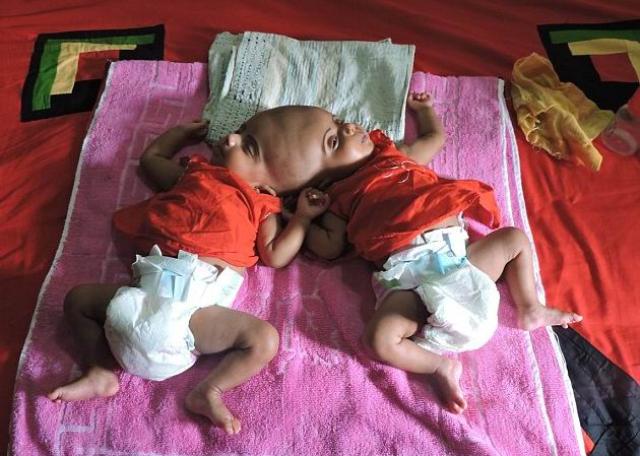
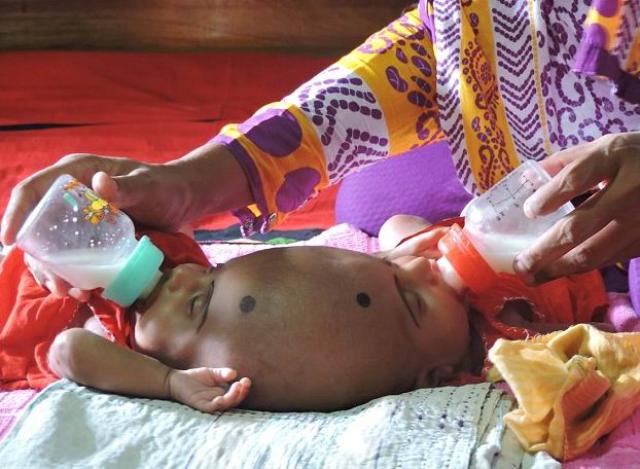
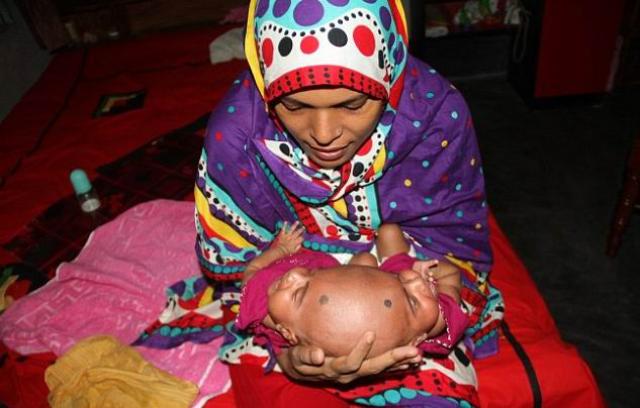
Siamese twins Rabia and Rukia, who have identical birthmarks, have been forced to remain in a suspended state for two years. This is the amount of time doctors needed to determine whether a complex separation surgery can be performed. Born with fused heads at a clinic in Pabna, Bangladesh, in July 2016, Rabia and Rukia's parents, Taslima and Muhammad, only learned about their twin girls being conjoined after their birth. It required a cesarean section and two weeks in the intensive care unit before the girls' condition was deemed stable. The family of Rabia and Rukia will have to endure two more excruciating years to find out if surgeons can separate the conjoined twins.
Taslima's Pregnancy and Birth
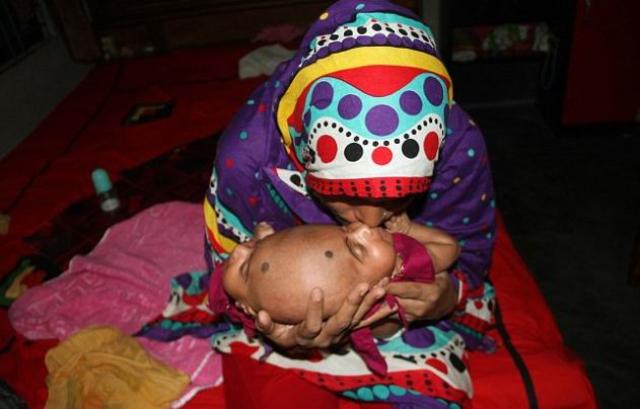
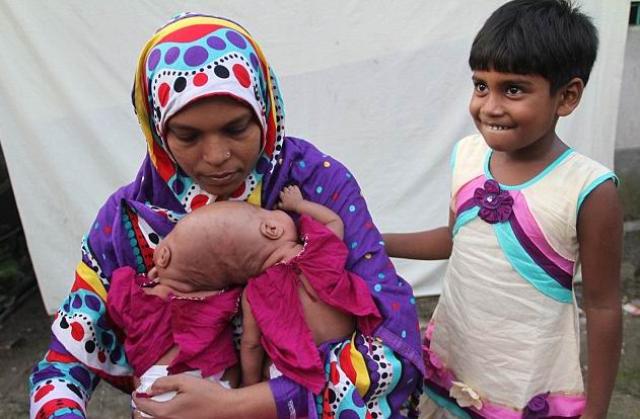
During Taslima's pregnancy, now 28 years old, she continued to teach at a local school and take care of her seven-year-old daughter, Rafia. Ultrasound scans did not reveal any abnormalities, but in the penultimate month of pregnancy, she experienced unpleasant pain. When doctors performed another sonogram, there were concerns about the "overly large heads" of the babies. However, the doctors decided that the accumulated fluid in the twins' brains affected their head size. Taslima was prescribed medication to reduce the size of the babies' heads in the womb. Even during the operation to deliver the girls, the medical staff did not immediately realize they were dealing with Siamese twins.
Discovering the Condition
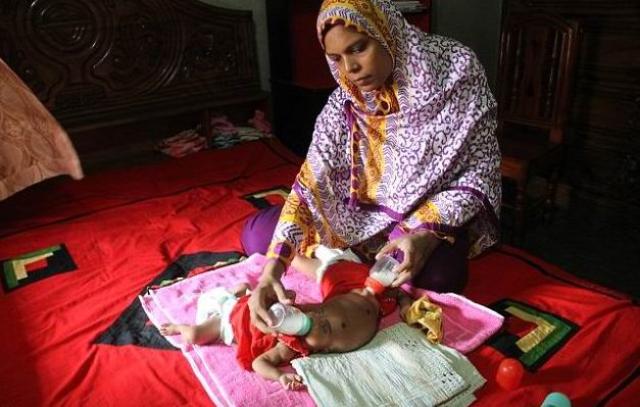
Taslima woke up from anesthesia almost a day later before learning about the true condition of her newborn daughters. Her husband, 27-year-old Muhammad Rafiqul, remembers the moment he entered the operating room and heard about the dire state of Rabia and Rukia. He said, "The doctors told me that my twins have fused heads. I had never seen such children before. I was nervous." Rabia and Rukia spent 15 days in the intensive care unit before their parents were allowed to take them home, where they were greeted by their older sister, Rafia.
The Hope for Separation
The doctors continue to monitor the twins' health and determine the feasibility of a surgical separation of Rabia and Rukia. Professor Rohu Rahim, a consulting pediatric surgeon from the medical university, said there is hope. He explained, "The heads of the babies are joined on the sides. We have seen cases in other children where the heads are joined from front to back, which creates mobility problems. Since the heads are joined on the sides in this case, physical movements like neck rotation are easier."
The Challenging Journey
Rabia and Rukia will need to undergo a 40-60 minute MRI scan. Additionally, the medical team needs to determine the blood circulation in the twins' brains – whether it is shared or separate in each head. Taslima emphasizes the need for separation to secure a future for her daughters. She says, "To ensure a future for the girls, separation is necessary. Their current condition is not the best. If I cannot separate them now, they may ask me in the future why I didn't do it."
The Financial Struggle
Both teachers, the girls' parents fear they will not be able to afford the surgery and have appealed to the Bangladeshi government for assistance. Muhammad said, "The surgery will be costly. We do not have the means to gather the required amount, so we are asking the government to help us." He prays that Rabia and Rukia both survive the surgery and can live a beautiful life.