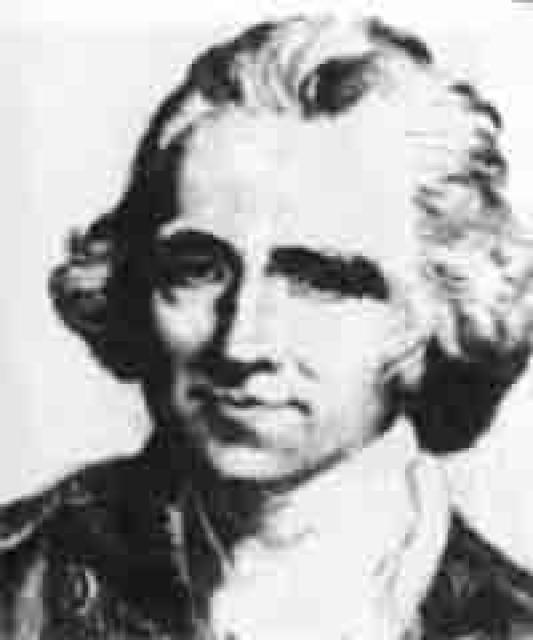
Ralf Aberkromby
 Great Britain
- Early Life and Education
- Military Career
- India, the Netherlands, and the West Indies
- Expeditions to Holland and Egypt
- Legacy
Early Life and Education
Sir Ralph Abercromby, born into a prominent Dutch lineage in Abercromby, Birkenbog, inherited the ancestral Scottish county of Clackmannan. He pursued education at Rugby, Edinburgh, and Leipzig universities.
Military Career
Seven Years' War and IrelandIn 1756, Abercromby joined the 3rd Dragoon Guards. From 1758 to 1762, he fought in the Seven Years' War under Duke Ferdinand of Brunswick. He rose through the ranks, becoming a Lieutenant in 1760 and a Captain in 1762.
While stationed in Ireland from 1762, Abercromby's efficient command earned him a fast-paced career. He became known as an exemplary officer and was elected to the House of Commons for Clackmannan, a position the Abercromby family held for generations. Soon after, he returned to military service.
India, the Netherlands, and the West Indies
Abercromby served in India and Edinburgh, and in 1787, he attained the rank of Major-General. During the campaigns in the Netherlands (1793-94), he led a division that included Arthur Wellesley, the future Duke of Wellington. He distinguished himself in the battles of Cateau, Famars, and Fleurus.
In 1795, Abercromby was appointed Commander-in-Chief of British forces in the East Indies. He conquered several West Indian islands but faced setbacks in Puerto Rico. He returned to England in 1797 and became Governor of the Isle of Wight and Commander of the Forces in Ireland.
Expeditions to Holland and Egypt
In 1799, Abercromby commanded the advance guard of an expeditionary force under the Duke of York in the Netherlands. He defeated General Daendels at Gelder but was defeated at Bergen. His victory at Bergen, however, failed to prevent the Allies' subsequent defeat.
In 1800, Abercromby led an expeditionary force to Egypt to confront the French. On March 8, 1801, he executed a masterful landing at Abu Qir. At the Battle of Alexandria on March 20, Abercromby's forces defeated the French general Menou, but he was mortally wounded and died aboard Admiral Elphinstone's flagship.
Legacy
Sir Ralph Abercromby became a renowned figure for his stern discipline and military excellence. His brother, Robert, also distinguished himself as a general and held the honorary position of Governor of Edinburgh Castle. Abercromby's remains were buried in Malta.


