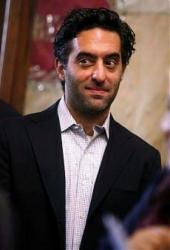
Ralph Waldo Ellison
 USA
USA- Biography of Ralph Waldo Ellison
- Early Writing Career
- The Invisible Man
- Later Years and Unfinished Novel
- Later Career and Legacy
Biography of Ralph Waldo Ellison
Early Life and EducationRalph Waldo Ellison was an African American writer, literary critic, and scholar. He was born in Oklahoma City, Oklahoma, to Lewis Alfred Ellison Sr., a construction worker, and Ida Millsap. He had a younger brother named Herbert, who was born in 1916. Ellison's father passed away when he was only three years old. In 1933, Ellison enrolled at Tuskegee University in Alabama, where he studied music. It was during this time that he developed a serious interest in modernist literature.
Early Writing Career
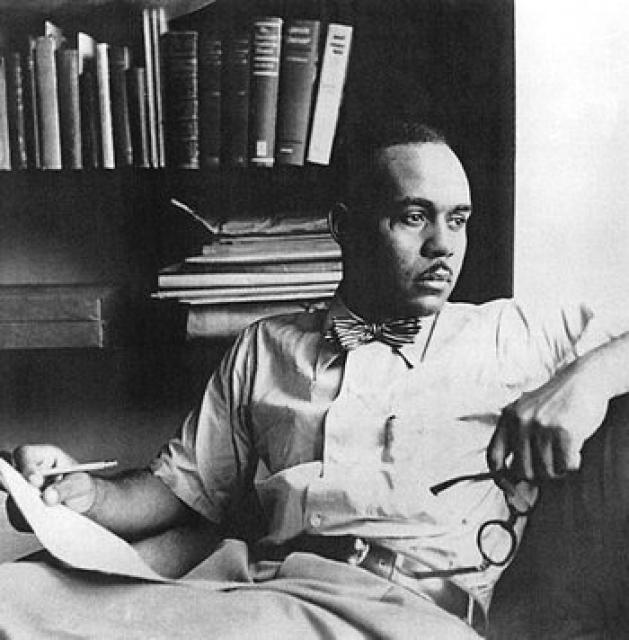
After three years at the university, Ellison, who lacked the funds to complete his education, left for New York City. There, he met artist Romare Bearden and writer Richard Wright. Wright encouraged Ellison to pursue a career in writing, and soon his first story, "Hymie's Bull," based on his own experiences, was published. From 1937 to 1944, Ellison regularly published stories and critical reviews in New York magazines.
The Invisible Man
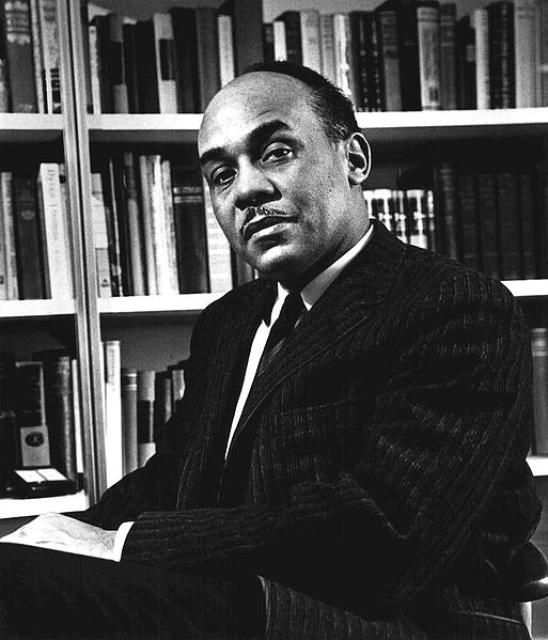
In 1946, Ellison married the photographer Fanny McConnell. In the late 1940s, Ellison earned a living through criticism and worked on his novel "The Invisible Man." This work, which explores the themes of identity and one's place in society, became Ellison's most significant work. Written from the perspective of an unnamed African American man living in 1940s New York and touching on taboo subjects, the novel was highly successful and earned Ellison the prestigious National Book Award in 1953.
Later Years and Unfinished Novel
From 1955 to 1958, Ellison spent time in Europe, living in Rome for a period. He then returned to the United States to take a position as a professor of American and Russian literature at Bard College. Starting in 1964, he worked at Rutgers and Yale universities. In the same year, Ellison published a collection of essays titled "Shadow and Act." Throughout these years, Ellison continued working on his unfinished novel, "Juneteeth." However, a significant portion of the manuscript was destroyed in a fire at his home in Plainfield, Massachusetts, in 1967. Biographer Arnold Rampersad questioned the truthfulness of this explanation.
Later Career and Legacy
In the following years, Ellison focused on teaching and writing essays. In 1985, his collection of seventeen essays, "Going to the Territory," was published, including an exploration of the works of renowned Southern writer William Faulkner, writings about his friend Richard Wright, and reflections on the contributions of African Americans to American culture. In 1970, Ellison was awarded the French Order of Arts and Letters and became a permanent member of the faculty at New York University. In 1975, he was elected to the American Academy of Arts and Letters. Ellison passed away on April 16, 1994, at the age of eighty, from pancreatic cancer. He was buried in Washington Heights, New York. His wife, Fanny Ellison, survived him until her death on November 19, 2005. After Ellison's death, unpublished manuscripts were discovered. In 1996, the book "Flying Home: And Other Stories" was released, and in 1999, five years after the writer's death, his unfinished novel "Juneteeth" was published in 368 pages, edited by Professor John F. Callahan. The complete materials of the "Juneteeth" manuscripts were later published by the "Modern Library" under the title "Three Days Before the Shooting" in early 2010, spanning around 900 pages.