Raymond Cohen
- A Manchester Prodigy
- From Wartime Service to the Concert Stage
- Orchestra Leader and Recording Artist
- Family, Teaching, and Lasting Influence
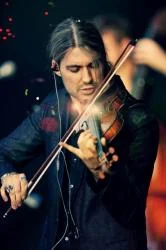
Raymond Cohen was an English violinist whose career moved easily between the concert hall, orchestra pit, recording studio, and classroom. Celebrated for his warm, distinctive tone and musical insight, he became a soloist with leading conductors, led the Royal Philharmonic Orchestra, and helped bring classical violin music to British television. His love of music was broad enough to take in chamber works, film soundtracks, light music, and jazz.
A Manchester Prodigy
Raymond Hyam Cohen was born in Manchester on July 27, 1919. Music was part of family life: his father, a schoolteacher and amateur violinist, gave him his first lessons. By the age of three he was already posing with a violin, an image that seemed to predict a life spent with the instrument.
At 13, Cohen began studying with Henry Holst, a Danish violinist who had led the Berlin Philharmonic. Two years later, Cohen won the Brodsky scholarship to the Royal Manchester College of Music. In the same period, he became the youngest member in the history of the Hallé Orchestra. Even as a teenager, he was performing on radio and giving concerts across northern England. At 19, he appeared with the Hallé as soloist in three concertos in a single evening: works by Bach, Mendelssohn, and Brahms.
From Wartime Service to the Concert Stage
The Second World War interrupted his rising solo career. Cohen served as a clarinetist in the Royal Corps of Signals Band, while continuing to practice the violin and learn a large body of concerto repertoire. After the war, he won the inaugural Carl Flesch International Violin Competition, a victory that launched his international career.
Cohen performed with major orchestras and conductors, including John Barbirolli, Malcolm Sargent, Paul Kletzki, Rudolf Kempe, and Pierre Monteux. He was known for the beauty of his sound and for a vivid, direct style that audiences found both technically assured and deeply expressive. In 1960, he was soloist in Karl Goldmark’s Violin Concerto at what became Sir Thomas Beecham’s final concert at the Royal Festival Hall.
He also championed new music. Cohen gave the first British performances of Dmitri Kabalevsky’s Violin Concerto and Dmitri Shostakovich’s Violin Sonata. He performed Nikos Skalkottas’s Violin Concerto at the Athens Festival and became the first artist to play a violin concerto on British television, performing Mendelssohn.
Orchestra Leader and Recording Artist
In 1959, Beecham invited Cohen to lead the Royal Philharmonic Orchestra. He held the post for six and a half years and also served as guest leader of the Philharmonia, London Symphony, and BBC Symphony orchestras. Colleagues valued his musical judgment, natural leadership, and ability to support the orchestra while maintaining a warm rapport with players.
Cohen’s musical life extended well beyond the symphonic stage. He led session orchestras for several James Bond films and television productions including “Brideshead Revisited” and “Yes, Minister.” He also played with light-music orchestras and jazz ensembles, and led Frank Sinatra’s orchestra in London and on tours abroad. Composer Robert Farnon chose Cohen for the solo parts in his recordings and wrote a violin rhapsody for him.
Family, Teaching, and Lasting Influence
In 1953, Cohen married South African pianist Anthya Rael. They performed together for decades as the Cohen-Rael duo, making their final public appearance on his 85th birthday. Their son, cellist Robert Cohen, joined them in the Cohen Trio; their daughter, Gillian, became a violinist. Family music-making remained central to Cohen’s life, with regular chamber sessions at home bringing together young and veteran players.
He taught at the Royal College of Music in London and inspired generations of students. An avid tennis and snooker player, Cohen was also known for his wit and generosity. He remained an outspoken listener throughout his later life, writing publicly about performance traditions and the expressive role of vibrato in string playing.
Cohen died in London on January 28, 2011, aged 91. He left behind recordings across an unusually wide musical landscape and the memory of a violinist equally at home in a concerto, an orchestra, or an intimate family trio. At the center of all of it was the instrument he had held since childhood and a sound audiences remembered long after the final note.