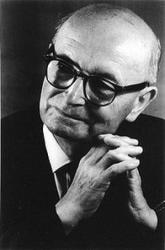
Raymond Firth
 New Zealand
- Raymond Firth: The Pioneer of British Economic Anthropology
- Early Life and Education
- Contributions and Career
- Later Years and Legacy
Raymond Firth: The Pioneer of British Economic Anthropology
Raymond Firth, a New Zealand ethnologist, is widely recognized as the founder of British economic anthropology. His research findings were instrumental in differentiating idealized rules within a specific community (social structure) from the actual behavior of these communities (social organization). Firth held the position of professor of anthropology at the London School of Economics for a long time, making him the true creator of British economic anthropology according to many scholars.
Early Life and Education
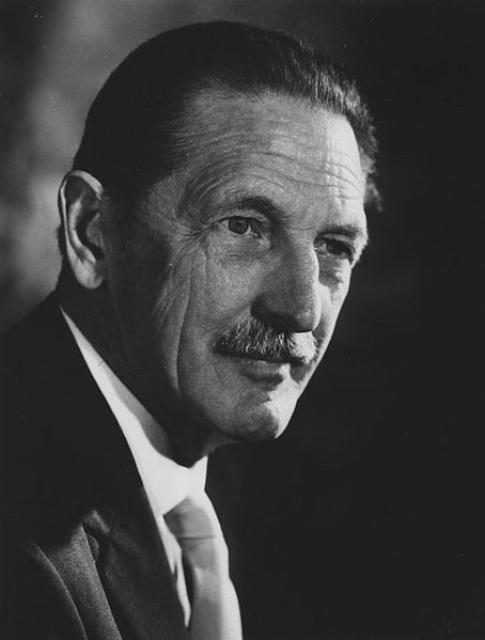
Raymond Firth was born in Tamaki, a suburb of Auckland, New Zealand. He attended Auckland Grammar School and Auckland University College. In 1921, Firth obtained a bachelor's degree in economics, followed by a master's degree in 1922 and a degree in sociology in 1923. In 1924, he began working on his doctoral dissertation at the London School of Economics. Initially, his dissertation was intended to focus on economic issues, but a meeting with the renowned anthropologist Bronislaw Malinowski led Firth to change the direction of his research. Consequently, Firth's dissertation explored the primitive economy of the Maori people of New Zealand, incorporating complex economic, anthropological, and ethnographic studies.
Contributions and Career
Even as a Ph.D. candidate, Firth returned to the Southern Hemisphere and was invited to work at the University of Sydney. He did not immediately start teaching; instead, in 1928, he traveled to Tikopia, the southernmost of the Solomon Islands. This journey offered him a unique opportunity to observe the lives of Polynesians unaffected by civilization, who worshiped pagan gods and employed a relatively primitive form of economy. Firth's observations formed the basis of ten books and numerous articles. His first book, "We the Tikopia: A Sociological Study of Kinship in Primitive Polynesia," published in 1936, remains a foundational textbook in many university courses.
In 1930, Raymond Firth began teaching at the University of Sydney, and after Alfred Radcliffe-Brown moved to Chicago, Firth became a full professor. He also inherited Radcliffe-Brown's position as editor of the journal "Oceania" and director of the Anthropology Research Committee. In 1933, Firth returned to the London School of Economics. From 1939 to 1940, together with his wife Rosemary Firth, a renowned anthropologist, he conducted research in Kelantan and Terengganu. During World War II, Firth actively collaborated with naval intelligence, utilizing his knowledge of the geography of the Pacific Ocean. In 1944, he succeeded Malinowski as a professor of social anthropology at the London School of Economics, where he remained for 24 years.
Later Years and Legacy
Firth made several return trips to Tikopia, although each subsequent visit became more challenging for him. In 1968, he relocated to the University of Hawai'i. He taught at various institutions, including British Columbia, Cornell, Chicago, and New York. Even after retiring from teaching, Firth continued to write new articles until his final days. Raymond Firth passed away on February 22, 2002, at the age of nearly 101. His contributions to economic anthropology and his extensive research on Polynesian societies have left a lasting legacy in the field.