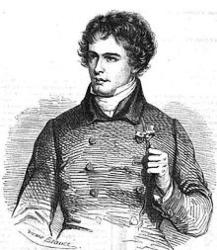
Regis Evariste Huc
 France
- Early Life and Missionary Work
- Mission to China and the Mongol People
- Journey to Tibet
- Arrival in Lhasa and Exile
- Later Life and Political Advocacy
Early Life and Missionary Work
Évariste Régis Huc, a French Sinologist, Tibetologist, and Mongolist, was born in the mid-19th century. As a Catholic monk and missionary, he belonged to the Congregation of the Mission, known as the Lazarists.
Mission to China and the Mongol People
Huc entered the Lazarists in 1839 and was immediately sent to Macao, China. There, he spent 18 months studying Chinese and disguising himself as a local. After heading to a mission in Guangzhou, he oversaw a Christian mission in southern China and later traveled to Beijing to further his Chinese proficiency. From there, he ventured beyond the Great Wall into the Heishui valley, where he ministered to Chinese Christians who had fled persecution in the 16th century.
Learning the language of the local "Tartars," Huc translated religious texts for them. Ambitious to travel from China to Lhasa and ultimately to India, he was well-prepared when he was assigned to Tibet in 1844 by the Apostolic Vicar of Mongolia.
Journey to Tibet
In September 1844, Huc reached Dolonnur and prepared for his expedition. Together with Joseph Gabet and a young Tibetan priest who had converted to Christianity, they disguised themselves as Buddhist lamas and set off. They crossed the Yellow River, navigated the sandy Ordos Desert, and arrived at Gansu.
In early 1845, they approached the Tibetan border at Tang-Kiul. To gather supplies and wait for an opportunity to join a Tibetan embassy returning to Central Tibet from Beijing, they stopped at the Gumbum Monastery. For three months, they immersed themselves in Tibetan language and literature.
Arrival in Lhasa and Exile
In September 1845, they accompanied the Tibetan embassy, a procession of 2,000 people and 3,700 animals. Traversing the Qaidam Basin, they passed Lake Koko Nor and finally reached Lhasa on January 29, 1846. The Tibetan regent received them favorably, and they established a small chapel.
Their endeavors were cut short by Qishan, a Chinese official and former governor of Zhili, who had been exiled to Tibet after negotiations with Charles Elliot. Fearing the potential consequences of Huc and Gabet traveling from Lhasa to India, he ordered their expulsion from Lhasa on February 26, 1846. After an official investigation, they were formally escorted back to Guangzhou in October 1846.
Later Life and Political Advocacy
In his later years, Huc became actively involved in French politics, particularly in events in Cochinchina. He urged Napoleon III to take decisive action, believing that "the Far East will soon become the theater of great events. If the Emperor wills, France can play an important and glorious role there."
Partly influenced by Huc's appeals, Napoleon initiated steps to enhance French influence in East Asia. In 1858, a naval expedition was dispatched to punish the Vietnamese for mistreating French Catholic missionaries and to demand concessions of the Vietnamese port of Tourane and Pulo Condor Island, as stipulated in an old but unfulfilled treaty from 1787. Eventually, after Huc's death, this culminated in the full-scale French invasion of Vietnam in 1861.