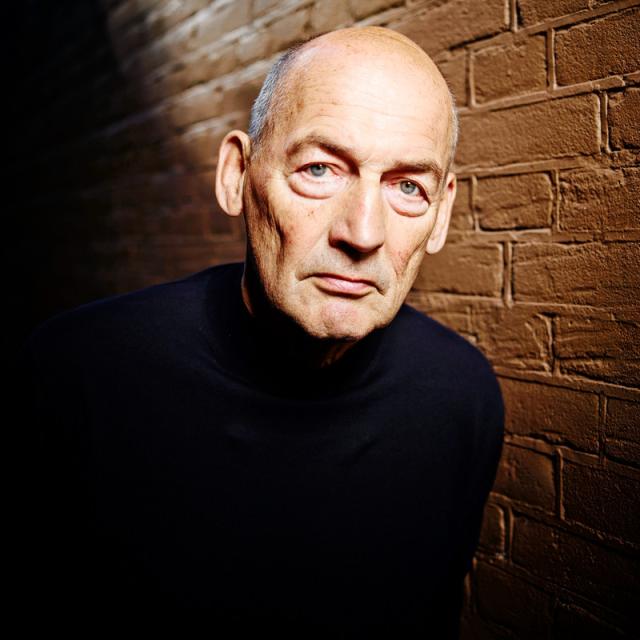
Rem Koolhaas
 Netherlands
- Early Life and Education
- Founding of OMA and Notable Projects
- Architectural Accolades
- Involvement in Russia
- Projects in Moscow
Early Life and Education
Rem Koolhaas, an influential Dutch architect and theorist, was born in Rotterdam, Netherlands. He pursued architectural studies at the Architectural Association School in London and Cornell University.
Founding of OMA and Notable Projects
In 1975, Koolhaas established the architectural firm Office for Metropolitan Architecture (OMA). Notable projects under OMA include the Guggenheim Hermitage Museum in Las Vegas (2002), the Netherlands Embassy in Berlin (2003), Prada boutiques in the US (2003), the Seattle Central Library (2004), the Casa da Música in Porto (2005), and the CCTV Headquarters in Beijing (2008).
Architectural Accolades
Koolhaas's contributions to architecture have been recognized with prestigious awards. He received the Pritzker Prize, considered the "Nobel Prize of architecture," and the European Union Prize for Contemporary Architecture Mies van der Rohe (shared with Ellen van Loon) in 2005. In 2010, he was awarded the Golden Lion at the Venice Biennale for his lifetime achievement in architecture.
Involvement in Russia
In 2007, Koolhaas visited Moscow and delivered a lecture at the Burevestnik Factory Club, designed by renowned Russian architect Konstantin Melnikov. He is a member of the International Board of Trustees for the creation of the Melnikov House Museum in Moscow.
From 2010 to 2013, he held teaching positions at the Strelka Institute for Media, Architecture, and Design. He was the Dean of the Institute and the head of the Preservation studio. During this time, he visited Moscow for lectures, seminars, consultations, and student project presentations.
Projects in Moscow
As a partner at OMA, Koolhaas has been involved in several projects in Moscow and its suburbs. Together with SANAA architects, OMA designed the entrance zone to the Skolkovo Innovation Center. He was also one of the architects involved in the reconstruction of buildings in Gorky Park for the Garage Center for Contemporary Culture.


