Rene Le Senne
 France
- Biography of René Le Senne
- Early Life and Influences
- Philosophy of Values
- Characterology
- Later Works and Death
Biography of René Le Senne
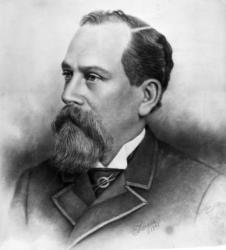
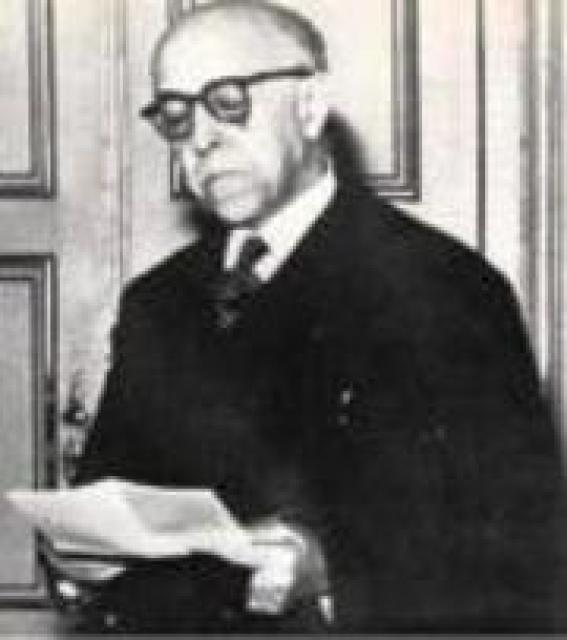
René Le Senne (1882–1954) was a French philosopher, moralist, and psychologist, closely associated with Christian existentialism. He was born on July 8, 1882, in Elbeuf-sur-Seine. Le Senne studied in various Parisian lyceums and graduated from the Higher Pedagogical Institute, where he was supervised by F. Raoult. In 1909, he received a degree in philosophy. In 1930, he defended his doctoral dissertations: the main one titled "Duty" (Le devoir, dedicated to Raoult) and the supplementary one titled "Lies and Character" (Le mensonge et le caractère). He taught for a while at the Lycée Louis-le-Grand and the Higher Pedagogical Institute. In 1942, he became a professor of moral philosophy at Sorbonne. In 1934, he co-founded the series "Philosophie de l'esprit" (Philosophy of the Mind) with Louis Lavelle. Le Senne was a member of the Academy of Moral and Political Sciences (1948) and the President of the International Institute of Philosophy (1952). He was also a Knight of the Legion of Honor.
Early Life and Influences
Initially, Le Senne's interests lied in the field of science and epistemology. However, after World War I, losing faith in science's ability to solve human life problems, he turned to the development of spiritually-oriented philosophical research. In this period, he was greatly influenced by Henri Bergson, although he disagreed with some essential aspects of Bergsonism, including the criticism of intellectualism. Le Senne was also influenced by Raoult, with whom he shared the concept of experience and the desire to spiritualize rationalism through the integration of intellect and intuition. Inspired by Gamel, Le Senne developed the concept of "concrete idealism," opposing empiricism and positivism. However, his main interest was the study of the functions of consciousness in its interaction with reality.
Philosophy of Values
Le Senne outlined his "philosophy of values" in his work Introduction to Philosophy (Introduction la philosophie, 1939). In this philosophy, value is understood not as a consequence but as the source of all duty. The main values - truth, goodness, beauty, and love - are represented and combined differently by different individuals, influenced by specific situations they find themselves in. The highest value is God, the infinite love that reveals itself to individuals in their spiritual, including moral, experience. This concept is also presented in his works "Obstacle and Value" (Obstacle et valeur, 1934) and "Treatise on General Morality" (Trait de morale générale, 1943).
Characterology
Le Senne is also known as the creator of the concept of characterology, where he proposes a classification of characters based on traits such as emotionalism and the ability for active engagement, among others. According to Le Senne, characterology aims to promote better understanding and communication between individuals. He presented this concept in his work "Treatise on Characterology" (Trait de caractérologie, 1949). Le Senne established the "Characters" series (Caractères) in the publishing house "Presses universitaires de France."
Later Works and Death
Among Le Senne's other works are "Personal Destiny" (La destinée personelle, 1951) and "The Discovery of God" (La découverte de Dieu, 1955; published posthumously). He passed away on October 1, 1954, in Paris.