Richard and Lennon McDonald
 Great Britain
- Richard and Lennon McDonald: Living with Ectodermal Dysplasia
- Zoe McDonald: Raising Awareness
- Understanding Ectodermal Dysplasia
- Overcoming Challenges and Seeking Support
Richard and Lennon McDonald: Living with Ectodermal Dysplasia
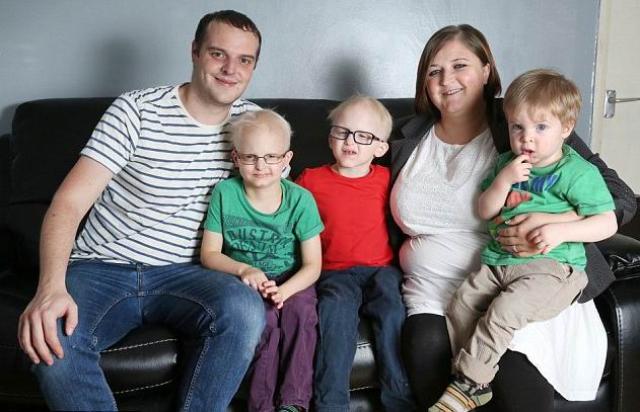
Richard and Lennon McDonald, two young boys aged five and six, have suffered from a rare genetic condition called ectodermal dysplasia (ED). This condition, which affects only 7,000 people worldwide, causes abnormal development of hair, teeth, and nails. The boys lack sweat glands, which means they cannot regulate their body temperature and are at risk of fatal seizures if they become too hot or too cold. The McDonald brothers were born without any signs of teeth, but later developed deformed and sharp teeth that made eating difficult due to the lack of saliva production in their mouths. However, they recently received dental prosthetics, allowing them to eat without fear of choking.

Zoe McDonald: Raising Awareness
The boys' mother, 27-year-old Zoe McDonald, has decided to share their story in order to increase awareness about ectodermal dysplasia. She recalls, "Richard was diagnosed when he was 16 months old. He had very pale skin, only a few pointed teeth, and no hair or eyebrows." "Due to the lack of teeth, his chin sank in, making him look as if he had aged quickly." It was during this time that Zoe was pregnant with their second child, Lennon. She explains, "The pregnancy was difficult, and then I found out that there was a 50% chance of our second son having the same condition." "It was a worrying time. When Lennon was born, we already knew that he had the same condition as his brother." Ectodermal dysplasias are a group of 150 inherited disorders estimated to affect 7,000 people worldwide.
Understanding Ectodermal Dysplasia
Ectodermal dysplasias are caused by a defective gene that affects the ectoderm, one of the three primary embryonic layers necessary for early-stage embryo growth. The ectoderm contributes to the formation of the eye lens, inner ear, fingers and toes, nerves, and more. Therefore, ectodermal abnormalities can result in improper development of any part of the body. When a person has at least two abnormal ectodermal features, such as malformed teeth and extremely rare hair, they are diagnosed with ectodermal dysplasia. Richard and Lennon's parents, Zoe and her husband, 28-year-old Craig, sought help from the National Foundation for Ectodermal Dysplasias.
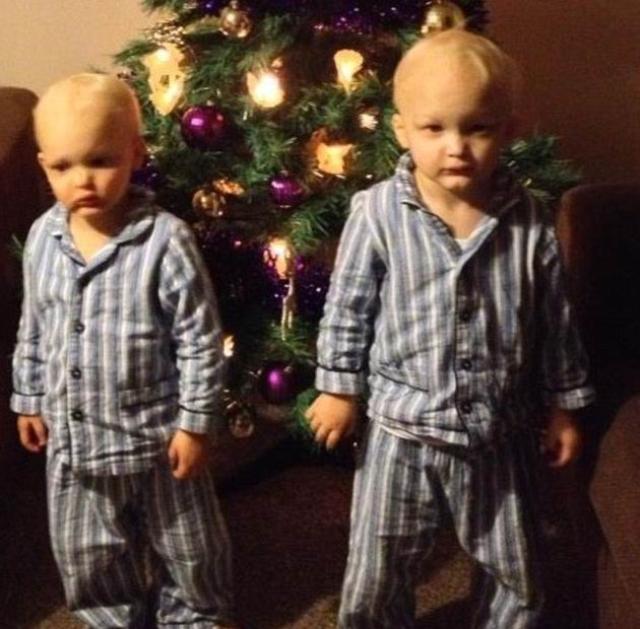
Zoe recalls, "Our support group was incredible. They provided us with a book that helped our children understand what they were going through. They also provided us with financial resources." "This helped address some issues, such as explaining to our sons why they had so few teeth and why their hair wasn't growing." "It was sometimes emotionally challenging. It was heartbreaking to hear my son's birthday wish. He wished for hair... However, now the children understand what they are going through." "In the past, other children would ask Richard and Lennon why they had vampire teeth. My children would respond that they weren't vampire teeth, but their own teeth." "I used to want to protect my children from what others said. Now, I just want people to stop being judgmental and see that my little boys have overcome everything."
Overcoming Challenges and Seeking Support
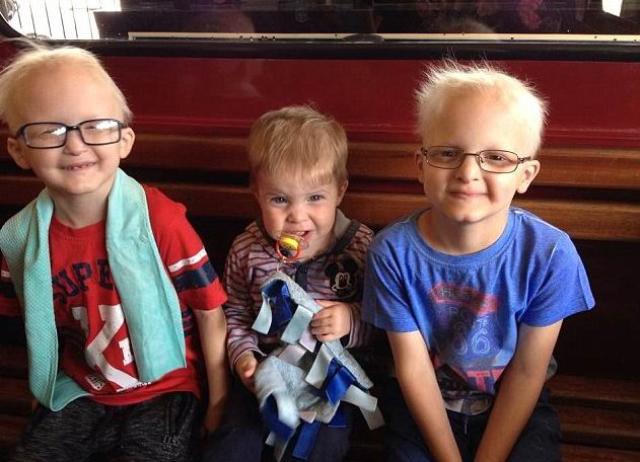
Due to the physical defects caused by ED, the McDonald brothers have become targets of teasing. Zoe reveals, "Someone once asked me if my children had progeria, a condition that causes premature aging." "I was also asked if Richard and Lennon had cancer. At first, it was difficult to hear all of this. But now we understand that very few people know about ectodermal dysplasia, so we are raising awareness." "Despite the fact that my children face more challenges than other kids, my Richard and Lennon never cease to amaze me with their progress."

In August 2015, the boys received dental prosthetics, greatly improving their ability to chew food. Prior to this, Richard had only six of his own teeth, while Lennon had eight. Despite the lack of sweat glands, both brothers have taken a keen interest in gymnastics. Their mother explains, "As soon as it gets too hot or too cold for the boys, the risk of a fatal seizure increases. That's why we occasionally put one of them under the air conditioner and try to keep the other warm."

Currently, their parents are raising funds to build a special outdoor play area so that Richard and Lennon can spend more time with their friends. Ectodermal dysplasias can be inherited and passed down to children. However, there is also a possibility that a newborn child may be the first in their family to have abnormal ectodermal development. In such cases, ectodermal dysplasia is likely caused by DNA changes or genetic mutations.
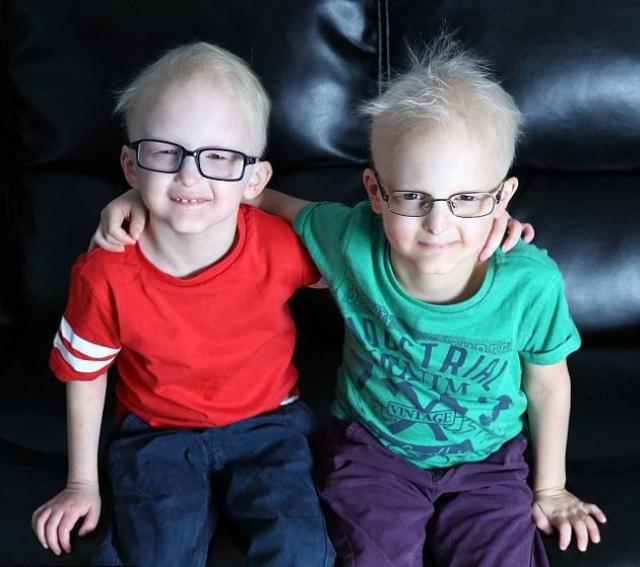
Although it is currently not possible to completely eliminate ectodermal dysplasia, many procedures aim to alleviate specific symptoms. According to Diana Perry, CEO of the National Foundation for Ectodermal Dysplasias, approximately six children are diagnosed with ED each year. The severity of tissue development disorders can vary. Only in rare cases does ED affect a person's lifespan, and only a few types of the condition lead to difficulties in learning and social adaptation.