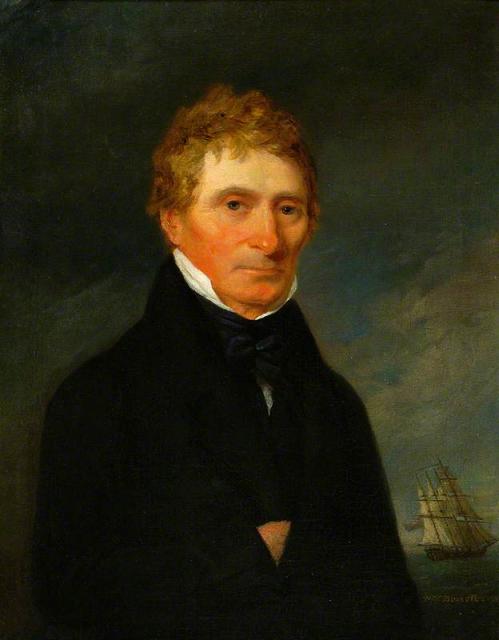
Richard Gower
 Great Britain
- Early Life and Education
- Maritime Career
- Innovations in Ship Design
- Later Inventions and Developments
- Transit Vessels
- Legacy and Death
Early Life and Education
Richard Gower, an English mariner, scientist, and inventor, was born to physicist, inventor, and clergyman Reginald Foote Gower. Awarded a scholarship, he briefly attended Winchester College but soon left for a career at sea.
Maritime Career
Gower served as a midshipman aboard the British East India Company's ship "Essex," transporting troops and the wounded. His keen observation and inquisitive mind became evident during these voyages. After three years, he returned to England and studied navigation in Edmonton. Gower eventually rose to the ranks of first mate and captain before retiring from active service in 1783.
Innovations in Ship Design
Back on land, Gower focused on creating inventions to improve ship performance and ease sailors' work. In the spirit of the Industrial Revolution, he rejected traditional, inefficient shipbuilding practices and sought optimal vessel effectiveness. Gower was among the first to consider a ship as a unified system. He extensively patented his inventions to protect his intellectual property.
Later Inventions and Developments
Settling in Ipswich, Gower's inventive pursuits continued. He proposed a new system of cruiser deployment to safeguard coastal vessels. He developed a method for aligning ships at specific distances using lines running through masts. His twin-hulled catamaran model, driven by an underwater waterjet, garnered attention. Gower firmly believed in the potential of steam pumps over oars and paddle wheels.
Transit Vessels
Gower dedicated much of his life to the development and promotion of his "Transit" vessels. These innovative ships were designed for high speed and utilized cavitation forces. Despite their promise, the British Admiralty remained uninterested in Gower's inventions, a mystery to this day.
Legacy and Death
Richard Gower passed away in Ipswich in July 1833, survived by his wife, two sons, and three daughters. He was laid to rest near the local church, surrounded by seamen and shipbuilders of all ranks.