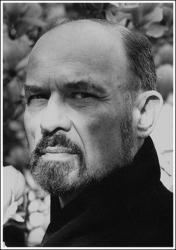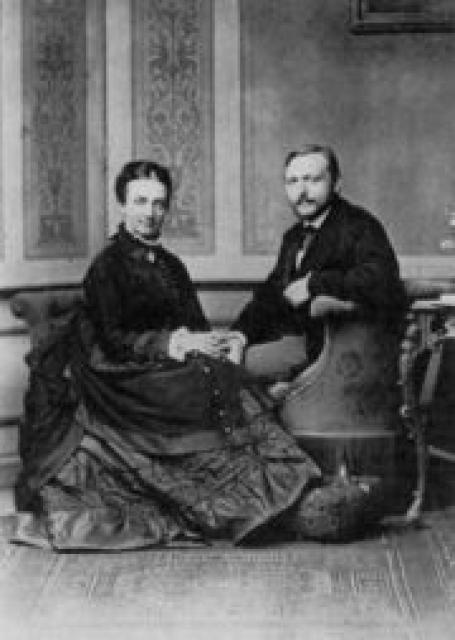
Richard Krafft-Ebing
 Germany
Biography of Richard von Krafft-Ebing
Richard von Krafft-Ebing was a German psychiatrist and neuropathologist, as well as a renowned Austrian and German sexologist. He was also the director of the Feldhofen Asylum for the Insane. Krafft-Ebing was born into a family of prominent civil servants, with his mother being from a family of lawyers and recognized intellectuals.
Education and Career
Krafft-Ebing enrolled in the medical faculty of Heidelberg University, founded by Rupert I, Elector Palatine, in 1836. During his time in Heidelberg, he attended lectures by Friedrich Wilhelm Hagen, the oldest German psychiatrist, who was in charge of the university clinic. His specialization was further determined when he was sent to Zurich for recovery after typhoid fever. There, he attended lectures at the University of Zurich by the founder of psychiatry, Heinrich Grisinger. It was in Zurich that he also met Wilhelm Erb, a world-famous author of the book "Textbook of Electrotherapy."
In Heidelberg, Krafft-Ebing was under the guardianship of his maternal grandfather, a well-known lawyer in Germany. He was nicknamed the "defender of the damned" because he defended the rights of those accused of immoral crimes, particularly those associated with sexual perversions. In the field of forensic medicine, Krafft-Ebing's mentor was a close relative, the famous Mittermayer.
Krafft-Ebing obtained his academic degree in 1863, with his doctoral dissertation focusing on delusions. After defending his dissertation, he embarked on a tour to promote his brilliant medical education. He visited the University of Vienna, where his teachers included Skoda, Oppolzer, and Rokitansky. He then traveled to Prague, Berlin, and finally in 1864, he took up a position at the Illenau Asylum. This large psychiatric institution, opened in 1842 in Godesberg, was led by Christian Roller, a Strasbourg neurohistologist who described the nucleus of the accessory nerve in 1871. Illenau became the main supplier of German psychiatrists for 30 years, with notable psychiatrists such as Fischer, Gasse, Gudden, Kirn, and Schule all having worked there. Schule eventually became the head of Illenau after Roller's death.
Contributions and Achievements
One of Krafft-Ebing's most famous works is the book "Psychopathia Sexualis" (1886), one of the earliest published studies on sexual deviance. He coined the term "sadism" (named after the Marquis de Sade) and introduced the term "masochism," using the name of the contemporary writer Leopold von Sacher-Masoch, whose partially autobiographical novella "Venus in Furs" depicted the protagonist's desire to be whipped, tortured, and enslaved by a beautiful woman. Krafft-Ebing also introduced the term "zoophilia" in his book "Psychopathia Sexualis." The scientist considered homosexuality to be a sign of human degradation and a disease.
Furthermore, Krafft-Ebing authored a three-volume textbook on psychiatry, solidifying his reputation as a prominent figure in the field. His research and writings have had a lasting impact on the understanding of human sexuality and psychiatric disorders.