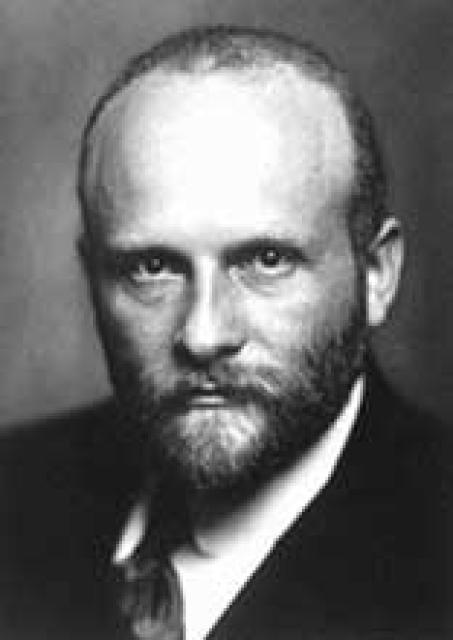
Robert Barany
 Austria
- Robert Bárány: Pioneer in Vestibular Science
- Early Education and Influences
- Groundbreaking Discovery
- Recognition and Honors
- Russian Imprisonment and Nobel Prize
- Controversy and Return to Sweden
- Legacy and Publications
Robert Bárány: Pioneer in Vestibular Science
Born into the family of a bank clerk in Vienna, Robert Bárány embarked on a remarkable medical journey.
Early Education and Influences
After graduating from the University of Vienna in 1900, Bárány immersed himself in various medical disciplines, including psychiatry, neurology, and surgery. Inspired by Sigmund Freud's theories on dreams, he became acquainted with the master psychoanalyst and sought his guidance.
Groundbreaking Discovery
Joining the Department of Otolaryngology at the University of Vienna in 1903, Bárány made a seminal observation: irrigating the ear with water elicited dizziness accompanied by rhythmic eye movements (nystagmus). He established the temperature dependence of nystagmus, revealing the sensitivity of the vestibular system to external stimuli.
Recognition and Honors
Bárány's groundbreaking work earned him accolades: a professorship just before World War I, the prestigious Guye Prize (1914), and ultimately, the Nobel Prize in Physiology or Medicine in 1914. The award, however, was delayed due to his imprisonment during the war.
Russian Imprisonment and Nobel Prize
Despite his physical limitations, Bárány volunteered for the front lines. In the aftermath of a battle, he was captured and held captive in a Russian prison. The Nobel Prize announcement reached him there, but his release was delayed until 1915 after intervention from the Swedish prince.
Controversy and Return to Sweden
Upon his return to Vienna, Bárány faced accusations of plagiarism. Heartbroken, he resigned and relocated to Sweden, where he became a renowned otolaryngologist and social activist. He established the Swedish Academy for Social and Political Sciences and became a member of prestigious medical associations.
Legacy and Publications
Bárány's research laid the foundation for the field of otoneurology. His book "Untersuchungen über den Vestibular-Apparat des Ohres" (1906) remains a classic in the field. He also authored "Die Radikaloperation des Ohres ohne Gehoergangsplastik" (1923), a groundbreaking surgical technique for treating ear infections.




