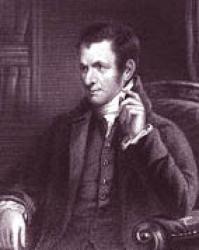
Robert Bunsen
 Germany
- Robert Bunsen: A Pioneer of Chemical Science
- Travels and Collaborations
- Academic and Research Career
- Icelandic Expeditions
- Innovations and Analytical Techniques
- Spectroscopy and Photochemistry
- Analytical Advancements
- Influence and Legacy
Robert Bunsen: A Pioneer of Chemical Science
Early Life and EducationBorn on March 31, 1811, in Göttingen, Germany, Robert Bunsen was a brilliant chemist from an early age. He graduated from the University of Göttingen in 1830 at the tender age of 19 and earned his doctorate for his development of a hygrometer.
Travels and Collaborations
In 1832-1833, Bunsen embarked on a tour of Europe, meeting renowned chemists and visiting industrial facilities. He also attended lectures at the École Polytechnique in Paris, expanding his knowledge.
Academic and Research Career
Pioneering InvestigationsBunsen's significant contributions spanned inorganic, analytical, and physical chemistry. In Kassel, he commenced extensive research on organic arsenic compounds, leading to the discovery of cacodyl. However, an accident involving cacodyl cyanide resulted in the loss of one of his eyes and forced him to abandon organic chemistry.
Focusing on metallurgy, Bunsen developed methods for gas analysis after studying iron smelting and blast furnace gases. His investigations into electrochemical processes culminated in the invention of the carbon-zinc galvanic cell (Bunsen cell) in 1841. Using batteries of these cells, he successfully electrolyzed magnesium and aluminum.
Icelandic Expeditions
Bunsen's explorations in Iceland during the 1840s laid the foundation for modern petrology. He studied volcanic formations and geysers, providing insights into the formation of igneous rocks.
Innovations and Analytical Techniques
Laboratory InnovationsBunsen's inventive mind led to the creation of numerous laboratory devices, including the Bunsen burner, water jet pump, ice calorimeter, vapor calorimeter, and a photometer with an oil spot.
Spectroscopy and Photochemistry
In 1854, Bunsen and Gustav Kirchhoff collaborated on seminal research in spectroscopy. They studied the spectra of flames colored by metallic salts, revolutionizing the field of chemical analysis. This led to the discovery of cesium and rubidium.
Analytical Advancements
Bunsen's work also extended to analytical chemistry. He refined iodometric analysis methods and, together with Henry Roscoe, conducted important studies on photochemistry, resulting in the formulation of the Bunsen-Roscoe law.
Influence and Legacy
A Model for Scientific ExcellenceBunsen's Heidelberg laboratory became a renowned center of chemical research, attracting renowned students, such as Roscoe, Tyndall, and Bayer, who went on to make significant contributions to the field. His legacy as an experimentalist and inventor continues to inspire chemists worldwide.