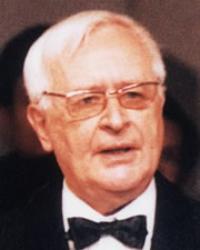
Robert Dixon
 Great Britain
- Biography of Robert Dixon
- Contributions to Linguistics
- Views on Linguistic Theory and Language Evolution
- Publications
Biography of Robert Dixon
Robert Dixon is a British and Australian linguist, professor, and Fellow of the British Academy. He graduated from the University of Oxford, where he obtained a Master of Arts degree in Mathematics in 1964. In the 1960s, he began conducting field research on Aboriginal languages in Australia, and in 1968, he defended his doctoral dissertation on the grammar of the Dyirbal language at the University of London. This work, which focused on the rare features of ergativity in Dyirbal, became one of the most cited grammatical descriptions of an "exotic" language in subsequent years. In 1991, he received a Doctor of Letters degree in Philology from the Australian National University in Canberra.
Contributions to Linguistics
Robert Dixon has made significant contributions to field linguistics, methodology of documenting endangered languages (particularly Australian languages), syntactic typology, and general language theory. His most well-known works are on the typology of ergativity, in which he proposed a classification of ergativity types and first described a number of features of ergativity found in Australian languages. His research on the typology of adjectives, in which he demonstrated the non-universal nature of this part of speech and discovered several patterns determining the scope and semantics of adjectives in different languages, has also gained significant recognition.
Dixon has authored numerous grammatical descriptions of Australian languages (such as Dyirbal, Yidiny, etc.), languages in Oceania (such as Boumaa and Fijian), and South America (such as Jarawara), which have played a significant role in establishing standards for the typological description of "exotic" languages. He is also the co-author, with A. Y. Aikhenvald, of comprehensive works on the typology and areal-genetic classification of Australian languages and languages of the Amazon basin.
Views on Linguistic Theory and Language Evolution
In the field of general language theory and linguistic methodology, Dixon holds particular positions that he defends in a series of polemical publications. He is a staunch opponent of formal language theories (including Chomsky's generative theory), believing that the linguistic community's priority should be the most complete and intensive documentation of small and endangered languages through the synthesis of traditional and functional theories (referred to as "basic linguistic theory"). His experience in applying "basic linguistic theory" to the description of European languages is demonstrated in his grammar of the English language based on semantic principles.
Dixon has also developed an original theory of historical language evolution and linguistic relatedness. Rejecting the significance of traditional comparative methods, the theory of "family trees," and to some extent the concept of linguistic relatedness itself, he proposes the theory of "punctuated equilibrium," according to which language development alternates between brief periods of divergence and long periods of convergence. Traditional comparative linguistics can only model certain phenomena of the first type, while the modeling of all processes of historical language evolution requires the involvement of methods from areal linguistics. Contrary to classical comparative linguistics (but in line with some of its critics of the first half of the 20th century), Dixon acknowledges the possibility of dual genetic affiliation of a language and emphasizes the leading role of convergent processes in language history. He strongly criticizes theories of distant language relatedness, including Greenberg's comparative constructions and the nostratic hypothesis.
Publications
Dixon is the author of several popular science books on Australian languages and field linguistics. He has also edited numerous collections on general typology, language theory, and descriptive linguistics.