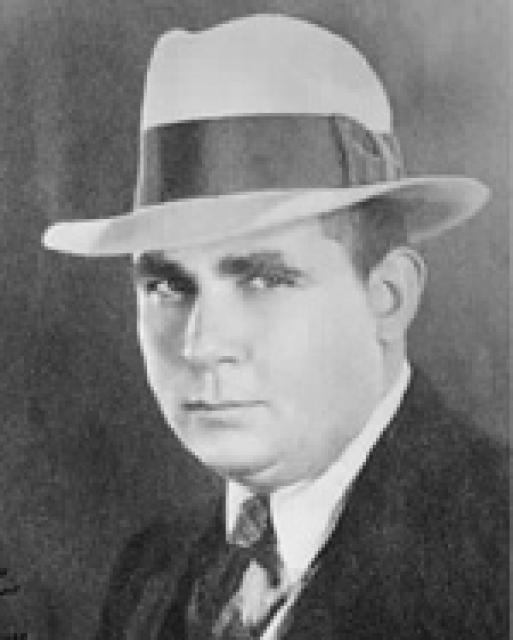
Robert Ervin Howard
 USA
USABiography of Robert Ervin Howard
Robert Ervin Howard was an American science fiction writer, novelist, and creator of the Cimmerian Conan and the Hyborian Age universe. He was sometimes referred to as "Howard" or "Howard" in Russian translations and in the Russian-speaking Internet. He was a friend of H.P. Lovecraft, a horror writer, with whom he corresponded. Howard worked in a dress shop as a clothes receiver, as a stenographer in the oil industry, and as a postal worker. He completed accounting courses. Howard, who grew up in Texas, had a habit of carrying weapons with him, earning him the nickname "Two-Gun Bob". He enjoyed shooting at tin cans. In his short life, his mother was his only woman, whom he adored and with whom he had long conversations. In 1935, after an operation, his mother fell into a coma. The son could not afford the expenses of her illness. Without his mother's support, Howard was completely unadapted to life. On June 11, Howard locked himself in a car to shoot himself. His first publication was the story "Spear and Fang" (1925). After numerous serials in magazines, Howard achieved the status of one of the founders of the "heroic fantasy" genre. His authority among the mass readership was based on his reputation as the creator of a new literary direction in fantasy literature called "sword and sorcery". Remaining unnoticed by literary critics of his time, he claimed a special role in modern literature after writing his first works about the Cimmerian Conan in 1932. Howard wrote 21 works in the Conan series (1932-1936, 1953-1955). The main 17 texts of his lifetime were published in the pulp magazine "Weird Tales".
A Lone and Reclusive Writer
Howard wrote hundreds of poems and three hundred works of fiction, including thrilling westerns, erotic stories, sports reports, and literary parodies. In addition to the Conan series from Cimmeria, Howard created series about other characters such as the barbarian Kull from Atlantis (1928), the Pictish king Bran Mak Morn, the Puritan fighter against evil Solomon Kane, and the Irishman Turlogh O'Brien. He also wrote adventure stories about the sailor-boxer Steve Costigan and westerns about Breckinridge Elkins. Despite skeptical assessments, works such as "God in the Bowl," "Beyond the Black River," and "The Valley of the Lost Women" remain examples for contemporary authors to emulate. Skeptical literary critics believe that Howard's phenomenon is based on targeting the teenage audience, combining the sharp plot of an adventure novel with the movement of pseudo-historical tribes through landscapes of never-existent countries (Khitai instead of China, etc.). Since the revival of the Conan saga turned out to be a commercially successful project, operations began to incorporate unrealized ideas into the Conan series when working with Howard's drafts. Some of Howard's novellas, dedicated to other characters, were rewritten so that Conan and his combat entourage became their main characters. It should be noted that during reprints, Howard's original plots from various works were either combined or fragmented. Therefore, there is still confusion about how many works Howard himself wrote and in which ones Conan was the main character. In addition, introductory essays like Howard's note "The Hyborian Age" are either divided into parts (in the Russian translation by M. Trubitsyna for Severo-Zapad in 1993) or positioned as mini-stories. The accepted source of texts about Conan is considered to be a 12-volume narrative about the exploits of the Cimmerian, edited for Lancer Books by science fiction writer L. Sprague de Camp.
The Conan Book Series
The book series of novels, stories, and tales about Conan was conceived and realized by L. Sprague de Camp, with the collaboration of Lin Carter. The literary character Thongor created by Carter (1965-1970) has a reminiscent nature. The series of texts about the adventures of Conan and his companions was then continued by an international team of authors (Bjorn Nyberg, Steve Perry, etc.). Posthumous editions were illustrated by Boris Vallejo and other masters of book illustration. In the second half of the 20th century, Howard's works were repeatedly adapted for the screen with commercial success and became the basis for comics and animated films. Today, Conan remains one of the most recognizable and commercially successful brands in the souvenir industry (printing, images on clothing, keychains, etc.). In Russia, the works have been published since 1989, and thanks to the efforts of the Russian publisher V. B. Nazarov and editor A. Belov, a collection of Howard's works was released in the late 1990s.





