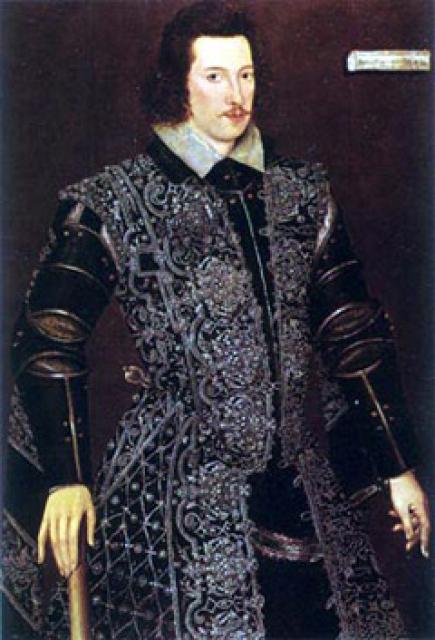
Robert Essex Devereux
 Great Britain
- Royal Connections and Literary Inspiration
- Rise and Fall as Favorite
- Irish Misfortunes and Ambition
- Court Intrigues and Conspiracy
- Desperation and Rebellion
- Trial, Confession, and Execution
- Legacy and Impact
Robert Devereux, 2nd Earl of Essex: A Charismatic Nobleman and Elizabeth I's Favorite
Royal Connections and Literary Inspiration
Robert Devereux, the second Earl of Essex, was a close associate of Henry Wriothesley, the Earl of Southampton, Shakespeare's patron. Scholars suggest that Shakespeare's portrayal of the heroic Henry V in his historical drama was inspired by Essex's own military prowess. In the play's epilogue, Shakespeare alludes to Essex's impending victorious return from Ireland, paralleling Henry V's triumphant homecoming from France.
Rise and Fall as Favorite
As the adopted son of the Earl of Leicester, Essex inherited his position as Queen Elizabeth I's close confidant and lover. His military achievements against Spain and his intimate relationship with the aging queen propelled him to prominence. However, Essex's arrogance and impulsivity strained his relationship with Elizabeth, who had her own share of advisors who sought to undermine his influence.
Irish Misfortunes and Ambition
In 1599, Essex was sent to quell a rebellion in Ireland. His poor performance and subsequent departure without authorization left him vulnerable to criticism. Upon his return to London, he faced charges of mismanaging the campaign and plotting against the queen. Essex's popularity as a war hero and Elizabeth's lingering affection for him prevented severe consequences, but he was removed from his offices and placed under house arrest.
Court Intrigues and Conspiracy
Essex's enemies, led by Robert Cecil, continued to plot his downfall. In 1600, he was accused of treason and imprisoned in the Tower of London. However, Queen Elizabeth refused to ratify the death sentence, showing her enduring fondness for Essex. Nonetheless, he was stripped of his privileges and prohibited from leaving his London residence.
Desperation and Rebellion
In October 1600, Essex's main source of income was removed, leading him to abandon his plans for a quiet retirement. With the support of his ambitious followers, he embarked on a reckless rebellion on February 8, 1601. Essex and his supporters marched through London, hoping to rally support, but were met with resistance. They eventually surrendered, and Essex was imprisoned once more.
Trial, Confession, and Execution
Essex's trial was swift and concluded with a guilty verdict of treason. Despite his claims of innocence, mounting evidence and confessions from his co-conspirators revealed their plans. In a moment of weakness, Essex confessed his guilt and implicated his followers. On February 25, 1601, Essex was executed in the Tower of London. His last words proclaimed his loyalty to Queen Elizabeth, but they failed to sway her.
Legacy and Impact
Essex's rise and fall as Elizabeth I's favorite and his subsequent rebellion remain objects of fascination. Historians have debated his true intentions, his motives for rebelling, and the role he played in the political intrigue of the Elizabethan court. Essex's story serves as a cautionary tale about the dangers of ambition, the complexities of courtly life, and the ultimate power of the monarchy.


