Sadao Araki
 Japan
Japan- Biography of Sadao Araki
- Early Career
- Role in the Siberian Intervention
- Political Career and Post-War Conviction
Biography of Sadao Araki
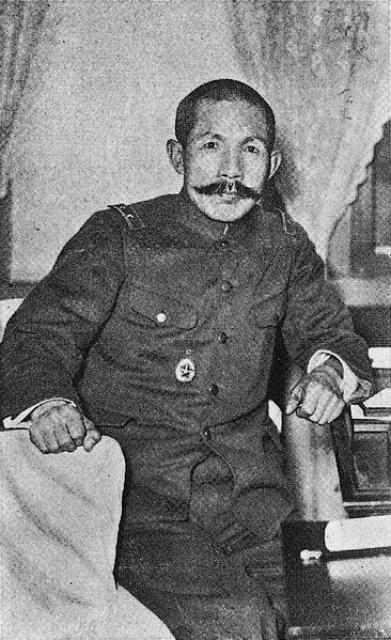
Sadao Araki was a Japanese statesman and military figure. He graduated from the Imperial Military Academy in 1897 and began his military service during the Russo-Japanese War as a company commander. Araki rose through the ranks to become a general in the Imperial Japanese Army and a charismatic leader of the nationalists, as well as one of the main theorists of the right-wing politicians in the Japanese Empire. He was highly respected as a leader of the radical faction within the Japanese army. Araki later served as Minister of Education in the cabinets of Konoe and Hiranuma.
Early Career
Araki graduated from the Imperial Military Academy in 1897 and served as a company commander during the Russo-Japanese War. In November 1909, he became a major and was later sent to Russia in December to study the combat training of the Russian army. From 1912 to 1913, he served as an assistant military attaché at the Japanese Embassy in St. Petersburg. Araki was promoted to lieutenant colonel in August 1915 and received two Russian orders: the Order of St. Vladimir with swords, 4th class in 1916, and the Order of St. Anne with swords, 2nd class in 1917.
Role in the Siberian Intervention
During the Japanese intervention in Siberia from 1918 to 1919 against the Bolshevik Red Army, Araki served as an officer in the staff of the Expeditionary Forces Headquarters in Vladivostok. During this time, Araki carried out secret missions in the Russian Far East and the Lake Baikal region. He was promoted to major general on March 17, 1924, and served as the commander of the 8th Brigade from 1923 to 1924. From May 1, 1925, he became the head of the 1st Bureau of the General Staff. On July 26, 1927, he was promoted to lieutenant general, and from August 2, 1929, to 1931, he served as the commander of the 6th Division. In 1931, he became the chief of the Department of General Affairs of the Inspectorate General of Military Training.
Political Career and Post-War Conviction
Araki became the Minister of War in Prime Minister Inukai's cabinet in December 1931. On October 20, 1933, he was awarded the title of full general. On December 26, 1935, Araki was granted the title of baron. Throughout his military career, Araki was a fervent supporter of the plan to combat communism in the Soviet Far East and Siberia. He was considered a leading expert on the Soviet Union and staunchly opposed communism. Araki met with the leader of the All-Russian Fascist Party, K. V. Rodzaevsky, on several occasions in 1934 and 1939.
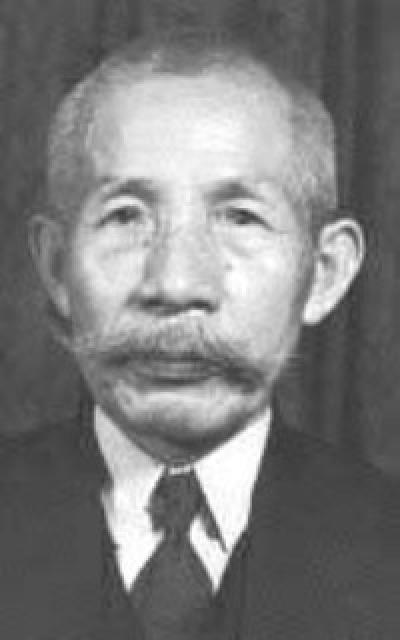
On March 10, 1936, Araki retired from military service and was appointed as the Minister of Education in Prime Minister Konoe Fumimaro's cabinet in 1937. This position provided him with an ideal opportunity to promote militaristic ideas within the national education system and among the general population. He continued to serve as Minister of Education in the Hiranuma cabinet. After World War II, Araki was arrested by the American occupation forces and appeared before the International Military Tribunal for the Far East, where he was convicted of war crimes. He was sentenced to life imprisonment but was released on health grounds from Sugamo Prison in 1955. Araki passed away 11 years later and was buried at the Fuhu Cemetery in Tokyo.