Robert Guiscard
- A younger son seeks his fortune
- Duke by papal agreement
- War with Byzantium and Rome
- An empire unfinished
Robert Guiscard rose from a younger son with little inheritance to become the most powerful Norman ruler in southern Italy. Through military campaigns, political marriages and an alliance with the papacy, he built a duchy that stretched across Apulia and Calabria and laid the groundwork for Norman rule in Sicily. His ambition also carried him into a daring campaign against the Byzantine Empire.
A younger son seeks his fortune
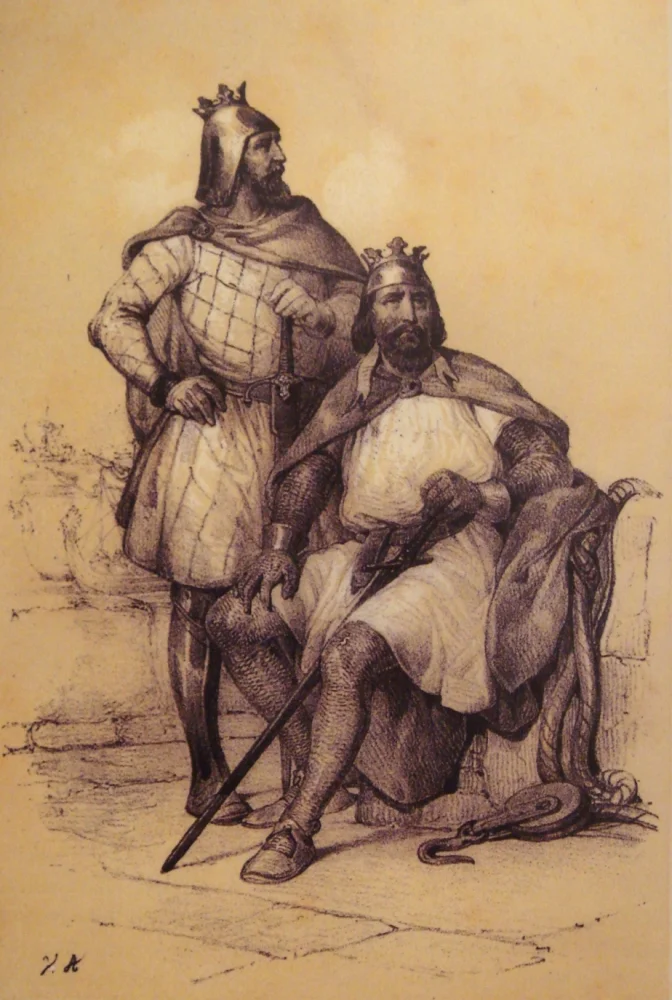
Born around 1015 in Normandy, Robert belonged to the Hauteville family, whose members were already seeking land and influence in southern Italy. As a younger son of Tancred of Hauteville, he had little prospect of inheriting the family’s main holdings. He crossed the Alps and joined other Norman adventurers, first building a base in the rugged territories of Calabria.
Robert earned the nickname Guiscard, often translated as “the resourceful” or “the cunning.” He proved adept at bringing rival Norman leaders under his authority and consolidating territories gained through war. After succeeding his half-brother Humphrey, he became count of Apulia and Calabria in 1057.
Duke by papal agreement
In 1059, at the Council of Melfi, Robert recognized Pope Nicholas II as his overlord. In return, the pope invested him as duke of Apulia and Calabria and future ruler of Sicily, which was still largely outside Norman control. The agreement gave Robert’s conquests a measure of political legitimacy and tied his fortunes to the papacy.
Robert and his younger brother Roger began the Norman conquest of Sicily in 1061. The campaign took decades, with Roger carrying much of the fighting on the island while Robert supported the effort and pursued other goals. The Normans captured Palermo in 1072, a major step toward bringing Sicily under their rule. On the mainland, Robert took Bari in 1071 and Salerno in 1076, further extending his power.
War with Byzantium and Rome
Robert’s reach extended beyond Italy. In 1081 he led an invasion across the Adriatic against the Byzantine Empire, whose emperor Alexios I Komnenos sought to defend the port of Dyrrhachium. Robert defeated the Byzantine forces there and captured the city, but the campaign remained difficult and his attention was repeatedly pulled back to Italy.
He also became entangled in the conflict between Pope Gregory VII and the German king Henry IV. When Henry’s forces occupied Rome in 1084, Gregory appealed to Robert for aid. Robert entered the city and rescued the pope, but his army’s arrival was followed by extensive destruction and looting. The intervention saved Gregory while leaving lasting damage to Rome and deepening hostility toward the Normans.
An empire unfinished
Robert returned to the Balkans to continue his campaign against Byzantium. In 1085, while preparing for further operations, he died on the island of Cephalonia, likely from illness. His son Roger Borsa inherited his Italian territories, while another son, Bohemond, continued his own military career in the east.
Robert’s rule was marked by both state-building and relentless conquest. He transformed the Normans from a collection of mercenary bands into a regional power, strengthened ties between the papacy and southern Italy, and helped open the way for a united Norman kingdom in Sicily. His final Byzantine campaign failed to create a lasting foothold, but his influence reshaped the political landscape of the central Mediterranean.