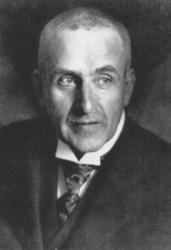
Robert Hamerling
 Austria
- Robert Hamerling: Austrian Poet and Playwright
- Revolutionary Spirit and Academic Career
- Literary Career
- Social Commentary and Satire
- Historical and Mythological Themes
- Dramatic Works
- Legacy
Robert Hamerling: Austrian Poet and Playwright
Early Life and EducationRobert Hamerling was born on March 24, 1832, in Kirchberg am Walde, Austria, into a humble family. He studied medicine at the University of Vienna.
Revolutionary Spirit and Academic Career
During the 1848 revolution, Hamerling joined the "Academic Legion," a group of revolutionary students. After the revolution, he became a high school teacher in Trieste.
Literary Career
In the 1850s-60s, Hamerling emerged as a prominent literary figure with his poetry collections "Venus in Exile" and "A Swan Song of Romanticism." He criticized the industrial age and yearned for an idealized past.
Social Commentary and Satire
Hamerling's satire "Homunculus" exposed the spiritual emptiness of bourgeois society. He blended pessimism with a zest for life, reflecting the internal conflicts of Austrian intellectuals in the 19th century.
Historical and Mythological Themes
Hamerling's epic poems "Ahasver in Rome" and "The King of Zion" explored the clash between different ideologies. In "Aspasia," he presented the struggles between philosophers and artists in Ancient Greece.
Dramatic Works
Hamerling also wrote plays, including "Danton and Robespierre" and "Lord Lucifer."
Legacy
Hamerling's writings had a significant impact on Austrian literature and culture. He was related to Adolf Hitler through Johann Nepomuk Hiedler. In 1980, Austria honored Hamerling with a postage stamp.