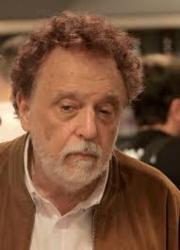
Robert Lucas
 USA
USA- Robert Emerson Lucas Jr.: Nobel Laureate Economist
- Early Career
- Personal Life
- Intellectual Contributions
- Critique of Macroeconomic Theory
- Supply-Side Economics and Human Capital
- Paradox of Lucas
Robert Emerson Lucas Jr.: Nobel Laureate Economist
Life and EducationRobert Emerson Lucas Jr. (born in Yakima, Washington) is an American economist renowned for his groundbreaking work in macroeconomics. In 1959, he earned a bachelor's degree in history from the University of Chicago. Five years later, he obtained a PhD in economics from the same institution.
Early Career
During his dissertation research, Lucas initially had a "quasi-Marxist" perspective, believing that economics was the driving force behind history. He planned to return to historical studies after a thorough exploration of economic theory. After teaching at Carnegie-Mellon University, he rejoined the University of Chicago.
Personal Life
In 1988, Lucas divorced his wife, Rita. Their divorce settlement stipulated that Rita would receive 50% of any Nobel Prize he won within the next seven years. Remarkably, Lucas received the prize in 1995, falling within the stipulated time frame. Half of the award was accordingly transferred to Rita.
Intellectual Contributions
Rational ExpectationsLucas is widely known for his research on the implications of applying the rational expectations approach. He posited in 1972 that a dynamic general equilibrium model forms the foundation for rational expectations theory. Agents in his model are fully rational individuals who make assumptions about future prices and quantities based on available information and then act to maximize their expected lifetime utility.
Critique of Macroeconomic Theory
In 1976, Lucas launched a vigorous critique of the foundations of contemporary macroeconomic theory, which was largely based on Keynesian principles. He argued that macroeconomic models should be built from microeconomic models, recognizing the theoretical impossibility of aggregating multiple smaller models. Additionally, he criticized economic policy prescriptions that relied on relationships (such as the trade-off between inflation and unemployment) that could be endogenously affected by the policy interventions themselves.
Supply-Side Economics and Human Capital
Lucas developed the supply-side theory, which explains how haphazard monetary policy can confound uninformed individuals. He also collaborated with Hirofumi Uzawa on the principles of human capital accumulation.
Paradox of Lucas
The "Lucas Paradox" is a well-known concept that describes the lack of capital flow from developed to developing countries. Lucas's insights have also extended to behavioral economics, demonstrating the influence of irrational investor behavior on asset pricing.