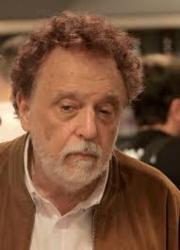
Vasiliy Leontiev
 USA
USA- Early Life and Education
- Years Abroad and Academic Transition
- Pioneering Econometrics and the Input-Output Model
- Harvard and the Harvard Economic Research Project
- Global Leadership in Economic Analysis
- International Recognition and the Nobel Prize
- Connection to Russia and Legacy
- Final Years and Enduring Wisdom
Early Life and Education
Vasili Leontief, born on August 5, 1906, in St. Petersburg, Russia, showcased his brilliance from a young age. At the age of 19, he graduated with honors from Leningrad University, receiving a degree in economics.
Years Abroad and Academic Transition
Leontief's thirst for knowledge led him abroad in 1925. He earned a doctorate in economics from the University of Berlin, worked at the Institute of World Economy in Kiel, and served as an economic advisor in China. Drawn to the academic rigors of the United States, he relocated in 1931, becoming an American citizen a few years later.

Pioneering Econometrics and the Input-Output Model
Leontief's academic pursuits centered on bridging economic theory with statistics and mathematics. His groundbreaking contributions laid the foundation for econometrics, a field that quantifies economic data for analysis. In 1936, he published the "input-output" model, a macroeconomic approach that revolutionized economic forecasting and planning.
Harvard and the Harvard Economic Research Project
Leontief joined the esteemed faculty of Harvard University in 1932, where he embarked on pioneering research. In 1948, he established the Harvard Economic Research Project, a hub for scholars to collaborate and advance economic understanding.
Global Leadership in Economic Analysis
Leontief's influence extended beyond academia. In 1975, he founded the Institute for Economic Analysis at New York University. Under his leadership, a massive United Nations project assessed the state and prospects of the world economy, providing invaluable insights for policymakers.
International Recognition and the Nobel Prize
Leontief's contributions earned him global recognition. In 1973, he received the Nobel Memorial Prize in Economic Sciences for his groundbreaking work on the input-output model. He became one of the first Soviet-born economists to be honored with the Nobel Prize.
Connection to Russia and Legacy
Despite his emigration, Russia remained close to Leontief's heart. He regularly visited, collaborated with Russian scholars, and supported the establishment of the Leontief Center in St. Petersburg. His insights into the Russian economy proved invaluable during the transition to a market economy.
Final Years and Enduring Wisdom
In his later years, Leontief continued to share his wisdom and insights. He spoke extensively about the challenges and opportunities facing economies in transition, emphasizing the importance of balancing private initiative with government regulation. His timeless contributions to economic science cemented his legacy as one of the most influential economists of the 20th century.