Robert Merton
 USA
USA- Robert Merton: Biography of an American Economist and Nobel Laureate
- Early Life and Education
- Career
- Nobel Prize and Research
- Awards and Recognition
- Hedge Funds and Long-Term Capital Management
- Personal Life and Associations
Robert Merton: Biography of an American Economist and Nobel Laureate
Robert Cox Merton is an American economist, professor at the Sloan School of Management at the Massachusetts Institute of Technology, and a Nobel laureate. He is renowned for his achievements in various fields of economics, but is best known for his research on risk control and evaluation. Despite his talent, Merton was unable to protect himself from all possible risks, as demonstrated by the events of 1998.
Early Life and Education
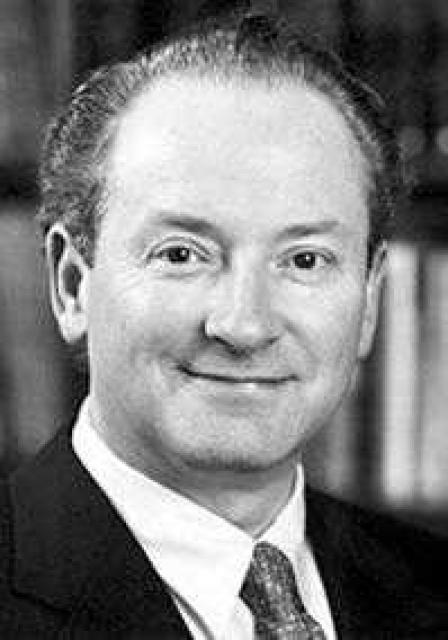
Robert Merton was born in New York City, into a family of sociologist Robert K. Merton and his wife Suzanne Carhart. He earned a Bachelor's degree in engineering mathematics from Columbia University, a Master's degree from the California Institute of Technology, and completed his dissertation in economics at the Massachusetts Institute of Technology under the guidance of Paul Anthony Samuelson.
Career
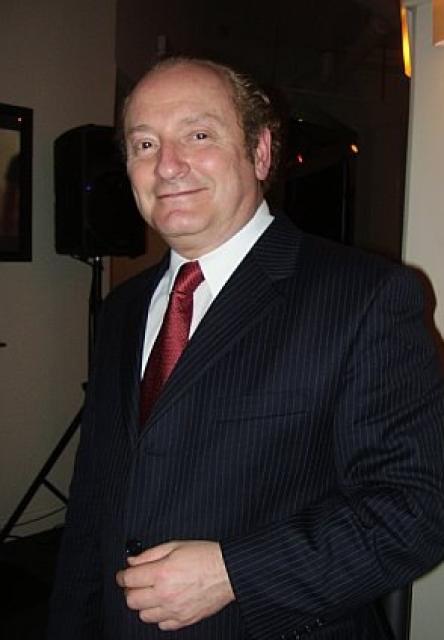
Merton later became a faculty member at the Sloan School of Management, where he worked until 1988. He then moved to Harvard University, where he held a named professorship and taught business administration from 1988 to 1998. On July 11, 2010, it was officially announced that Merton would be leaving Harvard and returning to the Massachusetts Institute of Technology.
Nobel Prize and Research
Merton was awarded the Nobel Prize in Economics in 1997 for his development of the Black-Scholes-Merton formula. His research focused on various aspects of financial theory, including the life cycle of financial systems, optimal intertemporal portfolio choice, capital asset pricing, option pricing principles, risky corporate debt obligations, loan guarantees, and many other topics. Merton actively writes articles and works on the existence, functioning, and control of various financial institutions. He explores financial innovations, dynamics of reforming and transforming financial institutions, control of the spread of serious financial risks, and advanced techniques for measuring and controlling credit risks of foreign governments. Merton has also applied his own research in practice.
Awards and Recognition
In 1993, Merton received the first 'Financial Engineer of the Year' award from the International Association of Financial Engineers, where he remains a senior member. He was honored with a place in the 'Hall of Fame' by the journal 'Derivatives Strategy,' and the journal 'Risk' followed suit. Merton also received the 'Risk's Lifetime Achievement Award' for his contributions to risk management theory.
Hedge Funds and Long-Term Capital Management
Since 1968, Merton has been involved in hedge funds. He worked under the guidance of Paul Samuelson and was introduced to the industry through the 'Arbitrage Management Company,' the first known company to use computer technology in arbitrage operations. The company thrived as a private hedge fund for some time before it was sold to 'Stuart & Co' in 1971. In 1993, Merton co-founded the hedge fund 'Long-Term Capital Management,' which initially generated substantial profits but eventually suffered losses of $4.6 billion in 1998. The company was unable to recover and closed its doors in early 2000.
Personal Life and Associations
In 1966, Robert Merton married June Rose, and they divorced in 1996 after 30 years of marriage. They have three children together, two sons and a daughter. Merton has also held leadership positions in organizations such as the American Finance Association and is a member of the National Academy of Sciences and the American Academy of Arts and Sciences.