Robert Taylor
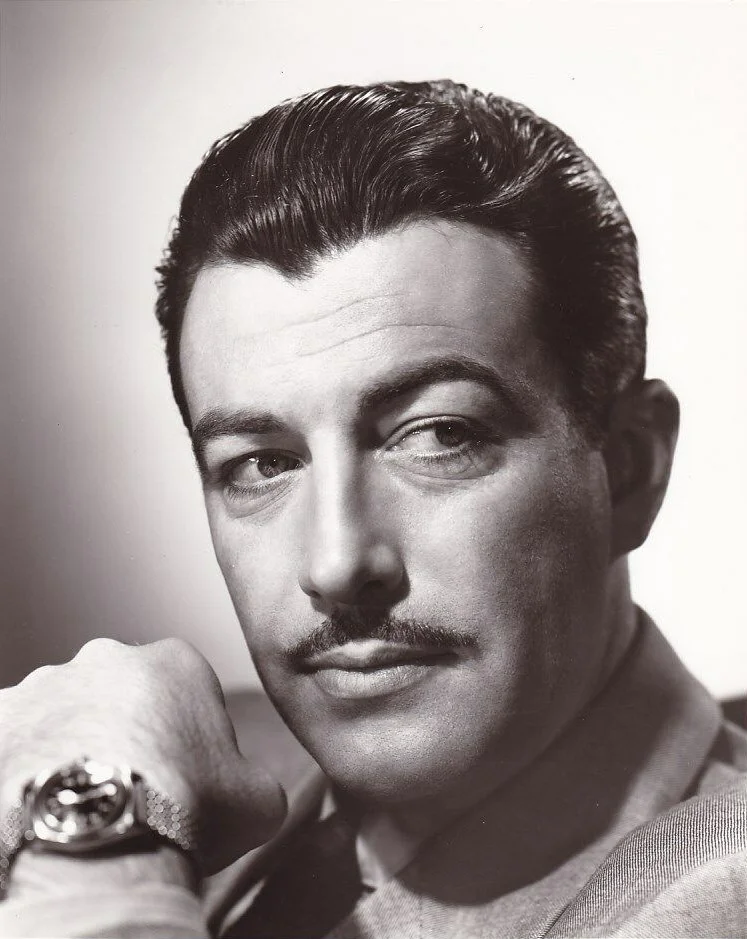
Robert Taylor became one of MGM’s defining leading men, moving from romantic dramas to historical epics, Westerns, and television. His composed screen presence and athletic good looks made him a major star, but his career lasted because he kept adapting as Hollywood changed. From the doomed lover of Waterloo Bridge to the Roman commander in Quo Vadis, he carried the studio image of a leading man into a second life on television.
From Nebraska to MGM
Born Spangler Arlington Brugh in 1911, Taylor grew up in Nebraska, where his father worked as a doctor. He studied at Doane College and later at Pomona College in California, where he took part in student theater. A talent scout noticed him in a college production, and Metro-Goldwyn-Mayer signed him while he was still a student. The studio renamed him Robert Taylor and carefully built his public image.
His early films cast him in romantic parts and placed him opposite some of Hollywood’s biggest stars. A breakthrough came with Camille (1936), in which he played the lover of Greta Garbo’s Marguerite. The role helped establish him as a popular leading man. He followed it with the British school drama A Yank at Oxford and other MGM productions that showed his ease in both contemporary and period settings.
A studio leading man
Taylor’s long MGM contract, which lasted roughly twenty-four years, made him one of the studio’s most reliable stars. He became known for romance, adventure, and historical spectacle, often playing principled officers or men of action. In Waterloo Bridge (1940), opposite Vivien Leigh, he gave a restrained performance in a wartime love story. Other notable films included Bataan, Johnny Eager, and The Bravados.
The scale of his parts grew with the success of Quo Vadis (1951), where he played Marcus Vinicius, a Roman commander drawn into the world of early Christianity. The film was a major international hit and helped define Taylor’s postwar image. He continued with large-scale adventures such as Ivanhoe and Knights of the Round Table, then gradually shifted toward Westerns and character roles.
Off screen, Taylor’s first marriage was to actress Barbara Stanwyck, from 1939 until their divorce in 1952. He married German-born actress Ursula Thiess in 1954, and they had two children. In the late 1940s he also testified before the House Un-American Activities Committee, identifying as a “friendly witness” during its investigation of the film industry—a politically charged episode in the period’s Hollywood blacklist controversies.
Television and later years
As movie audiences changed, Taylor moved successfully into television. He starred in The Detectives from 1959 to 1962, playing a police lieutenant, and later hosted and appeared in Death Valley Days. The transition kept him in the public eye beyond the years when MGM’s studio system was at its height.
Taylor died of lung cancer in 1969, aged fifty-seven. He left a career spanning more than three decades and dozens of films, with a screen persona that could shift from polished romantic lead to seasoned Western hero. His legacy is tied to MGM’s golden age, but also to the way he carried the classic leading-man style into a new era of television.