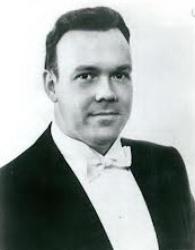
Roberto Stagno
 Italy
Italy- Roberto Stagno: The Famous Italian Opera Tenor of the 19th Century
- Early Life and Career
- Later Years and Legacy
Roberto Stagno: The Famous Italian Opera Tenor of the 19th Century
Roberto Stagno, also known as Roberto Stagno-Bellincioni, was a renowned Italian opera tenor of the 19th century. He emerged as one of the exceptional interpreters of verismo works when the genre burst onto the opera scene in the last decade of the 19th century. However, Stagno also possessed excellent bel canto technique, which he showcased from the beginning of his career.

Early Life and Career
Born Vincenzo Andrioli in Palermo, Sicily, on October 18, 1840 (although some sources insist on 1836), Stagno hailed from a minor noble family. He received his education in Milan and made his operatic debut in Lisbon, Portugal, in 1862. His breakthrough came three years later when he successfully replaced the renowned Italian dramatic tenor Enrico Tamberlik in the Madrid production of "Robert le diable."

Throughout the next three decades, Stagno performed numerous opera works in major theaters in Spain, Italy, France, and Russia, establishing himself as one of Europe's leading tenors. He also gained immense popularity in Argentina, where he first performed in 1879, and during the 1883-1884 season, he sang at the Metropolitan Opera in New York City. Stagno became the first soloist to perform at the grand opening of the Metropolitan Opera on October 22, 1883, as he portrayed the role of Faust in Gounod's opera.
Later Years and Legacy
Unfortunately, Stagno's time in New York ended sooner than he would have liked. American audiences struggled to appreciate his talent fully and criticized his expressive and prolonged vibrato. As a result, he was no longer invited to perform at the Metropolitan Opera and resumed his career in Italy and South America, where his vocal methods earned higher acclaim.
On May 17, 1890, in Rome, Stagno became part of opera history when he sang the role of Turiddu in the premiere performance of Pietro Mascagni's popular and influential verismo opera, "Cavalleria rusticana." Gemma Bellincioni, a soprano and Stagno's civil wife, also appeared alongside him, portraying Santuzza. Stagno and Bellincioni had met at sea while traveling with an opera troupe to Buenos Aires in 1886. Their daughter, Bianca Stagno-Bellincioni, born in 1888, also became a singer and actress. In 1945, she published a book about her parents.
Roberto Stagno passed away at the age of 57 on April 26, 1897, in Genoa, due to complications from kidney and heart disease. Unfortunately, no recordings of his performances have survived, as the widespread availability of recorded music was still about a decade away.
According to the recollections of his contemporaries, Stagno possessed a warm, vibrant, and emotionally resonant lyrical-dramatic vocal tone. It is believed that Fernando De Lucia, another representative of the "old school" and an outstanding performer of verismo opera in the 1890s, was the closest in sound and style to Stagno among the first tenors whose voices have been preserved through audio recordings.