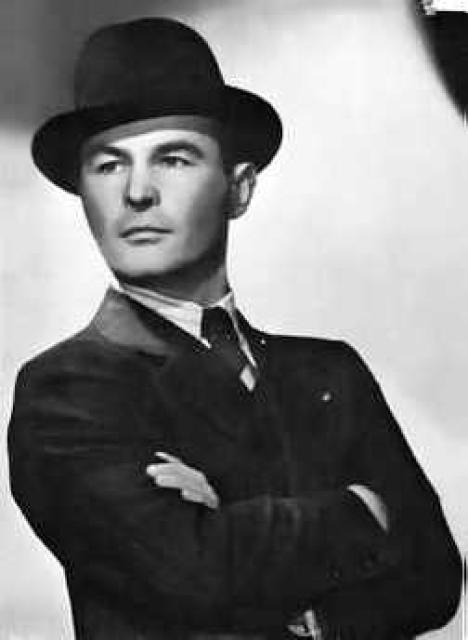
Jan Kiepura
 Poland
- Early Life and Education
- Early Career and International Success
- La Scala and Operatic Triumphs
- Film Acting and Global Stardom
- Return to Poland and Fan Adoration
- Hollywood and Post-War Career
- Metropolitan Opera and Broadway
Early Life and Education
Jan Kiepura was born on May 16, 1902, in Sosnowiec, Poland. His mother, a professional singer of Jewish descent, and his father, a baker and confectioner, raised him in a musical household. After completing his schooling, Kiepura studied law at the University of Warsaw while simultaneously pursuing vocal training under Wacław Brzeziński and Tadeusz Leliwa.
Early Career and International Success
Kiepura made his debut in 1923 at the 'Sphinx' movie theater in his hometown. In 1924, he joined the local choir and sang the role of Góral in Stanisław Moniuszko's opera 'Halka.' His breakout performance came in Lviv's production of Gounod's 'Faust.' In 1926, Kiepura left Poland for an international career, performing in Budapest, Berlin, Vienna, London, Stuttgart, Munich, and Prague.
La Scala and Operatic Triumphs
In 1928, Kiepura signed a three-year contract with La Scala, where he made his debut as Calaf and participated in the world premiere of 'Le Preziosa ridicole' under Arturo Toscanini. He also sang Cavaradossi in Paris, Warsaw, and Poznań. Upon his return home with the earnings from his performances, Kiepura built the renowned 'Patria' hotel in Krynica-Zdrój, Poland, rumored to have cost him $3 million.
Film Acting and Global Stardom
Throughout the 1920s and 30s, Kiepura starred in a dozen Polish musical films, becoming known internationally in English, German, and French cinema. In 1930, he toured South America, performing Cavaradossi, the Duke of Mantua, Rodolfo, and Alfredo in Rio de Janeiro, Montevideo, and Buenos Aires. A throat ailment temporarily sidelined his operatic career, but he became one of the first European cinema stars.
Return to Poland and Fan Adoration
In 1934, Kiepura returned to Warsaw, performing with sensational success, his concerts greeted with overwhelming enthusiasm. He famously sang for his fans from the balcony of the 'Bristol' hotel and even performed from the roof of his car, never shying away from interacting with his adoring audience. However, his busy schedule kept him away from Poland for extended periods.
Hollywood and Post-War Career
Kiepura signed contracts with Covent Garden in London, Opéra Comique in Paris, and Deutsche Oper Berlin. Hollywood producers also noticed his talent, leading to his career in the United States. In 1936, he married Hungarian soprano Marta Eggerth, and together they performed in operettas, concerts, films, and recordings. The couple had two children. In 1937, the threat of Nazism forced Kiepura and Eggerth to leave Europe and immigrate to the United States.
Metropolitan Opera and Broadway
In 1938, Kiepura made his Metropolitan Opera debut. He performed in concerts and opera houses across America and gained recognition on Broadway. In 1948, Kiepura and his family returned to Europe, residing in Paris for six years before eventually settling back in the United States. He passed away in 1966 at the age of 64 due to a heart attack, following an unpleasant encounter with a financial agent.


