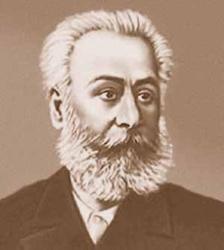
Roger Gilbert-Lecomte
 France
Roger Gilbert-Lecomte was a French poet who sought to push poetry beyond the limits of ordinary perception. A central voice in the avant-garde group Le Grand Jeu, he brought together radical experiments in language, metaphysical questions and an intense interest in altered states of consciousness. His published poetry was relatively small in volume, but its bold images and uncompromising search for experience left a strong mark on a close circle of writers and artists.
Reims and the Simplistes
Born Roger-Gilbert Lecomte in Reims on May 18, 1907, he spent his childhood in a city scarred by the First World War. His family left during the German bombardments and returned in 1919. Back in Reims, he attended the Lycée des Bons Enfants, where he met René Daumal, Roger Vailland and Robert Meyrat. The four formed a close-knit group of young writers and called themselves the Phrères Simplistes.
The Simplistes wanted to recover what they saw as the unfiltered perception and intuitive knowledge of childhood. They tested the boundaries of experience through reading, writing, philosophical discussion and, later, experiments with drugs. Their project was more than a literary club: they hoped to live out their ideas and use experience itself as a route to insight.
In 1928 Lecomte adopted the name Gilbert-Lecomte, partly to distinguish himself from his father. He and his friends moved into Parisian literary circles, where they encountered surrealism and its interest in dreams and the unconscious. They shared some of its rebellious energy, but developed their own philosophical and poetic ambitions.
Le Grand Jeu and its poetry
With Daumal, Vailland, the painter Joseph Sima and other collaborators, Gilbert-Lecomte helped create Le Grand Jeu, both a movement and a literary review. The journal published poetry, essays and criticism, and its contributors pursued a search for revelation that they linked to social and intellectual revolt. It appeared in three issues between 1928 and 1930; a planned fourth issue did not come out, and the group eventually broke apart.
Gilbert-Lecomte’s writing gave the movement some of its most vivid and personal expression. His poems move through images of birth, death, emptiness, wind and transformation, often challenging the reader’s sense of a stable self or world. His collection La Vie, l’Amour, la Mort, le Vide et le Vent appeared in 1933. Le Miroir noir followed in a small edition in 1937 or 1938, and a later poem, “Tétanos mystique,” became closely associated with his reputation. These two collections were the principal poetry books published during his lifetime.
The poet’s circle and personal struggles
Gilbert-Lecomte’s closest collaborators regarded his poetic project as inseparable from life itself. The desire to break through ordinary consciousness, however, came with personal costs. He increasingly struggled with drug addiction, and the Simplistes gradually drifted apart. His late writings continued to examine the fragility of consciousness and the possibility of reaching beyond conventional experience, but his health deteriorated.
He died in Paris on December 31, 1943, aged 36, after contracting tetanus. His short life ended before he could see the later revival of interest in Le Grand Jeu and its writers. His work was fragmentary and far less widely published than that of some of his contemporaries, yet he remained a powerful presence in the movement’s history.
Legacy
Gilbert-Lecomte’s poetry has often been read alongside that of René Daumal, his closest intellectual partner in Le Grand Jeu. The two writers shared an appetite for risk and a conviction that poetry should test the limits of thought and perception. Gilbert-Lecomte’s poems, manifestos and correspondence were collected and published more fully after his death, allowing later readers to encounter the work beyond the limited circulation it had received in his lifetime.
Today he is remembered as an original voice of the French avant-garde between the world wars. His writing is demanding and at times unsettling, shaped by the belief that poetry could be a direct encounter with reality rather than a polished description of it.