Ruben Mamoulian
 Russia
- Early Life and Education
- Theatrical Beginnings in Russia and England
- London and the Birth of a Director
- Discovering Dramatic Expression in Paris
- The Birth of the Eastman School of Music Opera Department
- Broadway and The Birth of "Porgy"
- The Cinematic Breakthrough of "Applause"
- Hollywood Success and Artistic Triumphs
- Later Career and Legacy
Early Life and Education
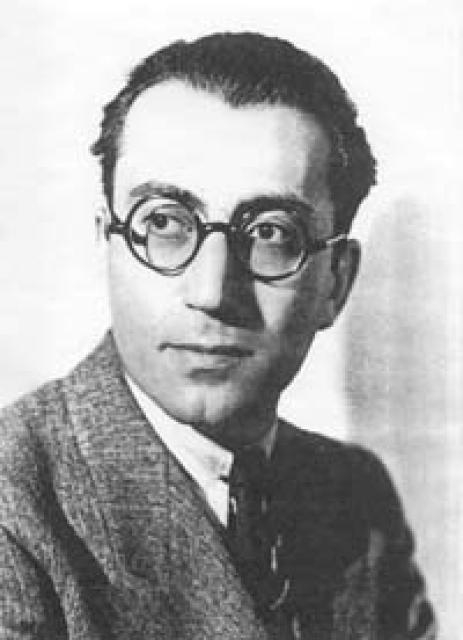
Title: Ruben Mamoulian: A Maestro of Stage and ScreenRuben Mamoulian was born on October 8, 1897, in Tiflis, Georgia. His father, Zakhar Mamoulian, a prominent banker, intended for his son to become an engineer. However, Ruben inherited his mother's passion for theater and aspired to a career in acting.
Theatrical Beginnings in Russia and England
A compromise was reached: Ruben enrolled in the Law Faculty of Moscow University. There, he stumbled upon an announcement inviting theater-enthusiast students to attend evening classes at the Moscow Art Theater under the tutelage of renowned director Eugene Vakhtangov. Ruben became a dedicated student of Vakhtangov but was forced to leave Moscow after only a few months due to the outbreak of the Russian Revolution.
Returning to Tiflis, Ruben's theatrical aspirations were stifled by the political unrest. In 1919, he traveled to London to join his sister Svetlana, who had married an English officer during the occupation of Tiflis.
London and the Birth of a Director
In London, Ruben struggled to find work in theater. One day, he encountered his friend Grigory Makarov, a former bass singer from the Mariinsky Opera. Makarov was forming a company for a touring production of opera and sought a director. Ruben volunteered his services, despite Makarov's initial skepticism about his youth.
During rehearsals, two individuals from the St. James Theatre visited and were impressed by Ruben's work. They offered him the opportunity to direct Austin Page's play "The Beating on the Door," which premiered in 1922.
Discovering Dramatic Expression in Paris
Ruben's directorial debut received mixed reviews, but his innovative staging caught the attention of Jacques Hébertot, head of the "Théâtre des Champs-Élysées" in Paris. Hébertot offered Ruben a position as one of the theater's three directors, alongside Louis Jouvet and Fédor Komissarzhevsky.
The Birth of the Eastman School of Music Opera Department
In 1923, Ruben traveled to America, where he joined the Eastman School of Music in Rochester, New York, at the behest of George Eastman. Eastman was interested in establishing an opera studio at his school and found Ruben's emphasis on dramatic expression and spectacle compelling.
Ruben's work at the opera studio included directing productions of "Rigoletto," "Faust," and "Carmen." He continued to develop his cinematic techniques, such as moving shadows on the scenery to enhance emotional impact.
Broadway and The Birth of "Porgy"
In 1927, Ruben made his Broadway debut with the acclaimed production of "Porgy." Inspired by DuBose Heyward's novel about life in the American South, Ruben insisted on using real African American actors instead of white actors in blackface. He encouraged them to express themselves authentically rather than imitate white performers. The play showcased Ruben's mastery of Stanislavsky's principles while also incorporating elements of his signature "stylization."
The Cinematic Breakthrough of "Applause"
With the advent of sound film, Hollywood sought out theatrical directors who could teach actors to speak on screen. Paramount Pictures offered Ruben a teaching position, but he countered with a proposal to direct. The result was the groundbreaking film "Applause" (1929), which showcased Ruben's innovative use of three cameras, sound mixing, and mobile cinematography.
Hollywood Success and Artistic Triumphs
Ruben continued to direct both films and plays, alternating between the two mediums and achieving critical and commercial success. Notable films from this period include "City Streets" (1930), "Dr. Jekyll and Mr. Hyde" (1931), and "Love Me Tonight" (1932), all of which demonstrated Ruben's versatility and mastery of cinematic storytelling.
Later Career and Legacy
Ruben Mamoulian passed away in 1987. Throughout his career, he remained dedicated to pushing the boundaries of theatrical and cinematic expression. He was known for his innovative staging, immersive storytelling, and keen eye for visual detail. His work continues to inspire and influence artists and filmmakers to this day, leaving an indelible mark on the worlds of stage and screen.