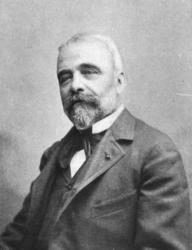
Rudolf Capell
 Germany
Rudolf Capell was a Hamburg scholar whose work ranged across history, classical languages, theology and education. In a time when professors were expected to move between disciplines, he built a reputation as a learned and productive writer, publishing dozens of studies while teaching at the city’s Academic Gymnasium. His career also reflected Hamburg’s place as a thriving center of Protestant scholarship and civic learning in the seventeenth century.
Family and education
Capell was born in Hamburg on January 24, 1635. His father, Jodocus Capell, was a Lutheran preacher who had come from Lübeck. The family’s religious and intellectual environment helped prepare Rudolf for a life devoted to scholarship.
Beginning in 1652, Capell studied at several universities, including Rostock, Wittenberg and Giessen. He earned the degree of Magister in 1656 and continued his education at other academies before returning to Hamburg. His studies covered the humanities and theology, grounding him in the classical languages and historical learning that later shaped his teaching and publications.
Academic career in Hamburg
In February 1660, Capell was appointed professor of rhetoric at Hamburg’s Academic Gymnasium, an institution that provided advanced education in the city. Rhetoric trained students in persuasive speech and writing, skills central to civic, religious and scholarly life in the period. Capell held the post for fifteen years, teaching and writing in parallel.
In 1675 he moved to a chair in history and Greek. The change brought together two of his central interests: the study of the past and the close reading of classical texts. His work was broad in scope, and contemporary accounts credited him with 97 printed works and treatises. The subjects ranged across history and philology, with his academic interests also extending into theology, philosophy and the study of books and manuscripts.
Scholarship and reputation
Capell’s Nummophylacium Luederianum, published in Hamburg in 1678, was a study and catalogue of a coin collection. It reflects the period’s wide conception of scholarship, in which examining coins, manuscripts and antiquities could illuminate history alongside the reading of written sources. He also gave a valuable medieval legal manuscript to Hamburg’s city library in 1669, evidence of his interest in preserving and sharing historical materials.
By the time of his death, Capell had earned recognition both within and beyond Hamburg as a formidable scholar. A later biographical account described him as mild in temperament, though it also recorded that a colleague’s intrigues caused him distress during his final years. His story offers a glimpse of the personal rivalries that could accompany academic life even for a widely respected teacher.
Death and legacy
Capell died in Hamburg on April 24, 1684, aged 49. His career was rooted in the city: he was born there, taught there for more than two decades and contributed to its intellectual institutions through both teaching and writing. Remembered as a historian, philologist and educator, he embodied the many-sided learning of the seventeenth-century scholar. His range of publications and his support for Hamburg’s library helped preserve and expand the city’s culture of study.