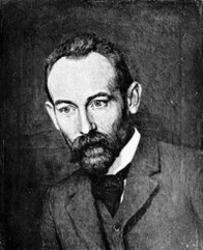
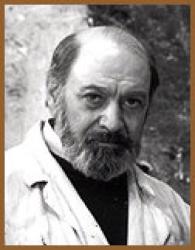
Rudolf Edwin Belling
 Germany
- Rudolf Belling: A German Sculptor of Note
- Artistic Sojourn and Partnerships
- Influences and Artistic Evolution
- Controversial and Persecuted Artist
- Exile and Legacy
Rudolf Belling: A German Sculptor of Note
Early Life and EducationRudolf Belling embarked on his artistic journey after graduating high school in 1901. Despite initially studying commerce, he soon realized his passion for sculpture and enrolled as an apprentice at an arts and crafts studio. Supplementing his practical training, he pursued studies at a vocational school and independently mastered the art of sculpture by attending drawing, modeling, and anatomy courses at Berlin's Veterinary College.
Artistic Sojourn and Partnerships
In 1908, Belling established a studio with Emil Kaselow, specializing in small-scale sculptures and decorative objects. They soon gained recognition for their work in Max Reinhardt's theatrical productions. After their studio closed in 1910, Belling continued his involvement in theatrical arts, where he was exposed to the emerging Expressionist movement in Germany. This influence became apparent in his sculptures, often featuring motifs such as dance. In 1911, he enrolled as a student at the Berlin Academy of Art under Professor Peter Breuer.
Influences and Artistic Evolution
Belling's experiences during World War I, where he served in an aviation unit, had a profound impact on his artistic style. After the war, he embraced socialist and revolutionary ideas, becoming a member of Berlin's Workers' Council on Art. He co-founded the leftist November Group of artists in 1918 and held a position in its executive board until 1932. In 1919, he created his renowned sculpture "Dreiklang" ("Triad"). During this period, Belling focused on applied art, advertising projects, and other commercial ventures. From 1924 to 1926, he embarked on a study trip across Europe, broadening his artistic perspectives.
Controversial and Persecuted Artist
In the years that followed, Belling collaborated with numerous architects on the artistic decoration of public and private buildings. In 1931, he became a member of the Prussian Academy of Arts. However, with the rise of Nazism in Germany, his work faced government censorship and persecution as "degenerate art," leading him to resign from the Academy. In 1935, he traveled to New York for a lecture tour, returning to Germany in 1936. However, due to political pressures, he left Germany for good in 1937.
Exile and Legacy
Belling sought refuge in Turkey, where he taught at the Istanbul Academy of Fine Arts. In 1951, he began working for the Istanbul Technical University. Despite the recognition he received in later years, including the West German Grand Cross of Merit in 1955, Belling's artwork remained controversial. In 1971, he was awarded an honorary doctorate by the Technical University of Munich. Belling passed away in 1972, leaving behind a legacy as an influential sculptor who remained true to his artistic vision despite political adversity.