Rudolf Serkin
 Czech
Czech- Biography of Rudolf Serkin
- Early Life and Education
- Early Career
- American Career
- Marlboro Music School
- Recordings and Accolades
Biography of Rudolf Serkin
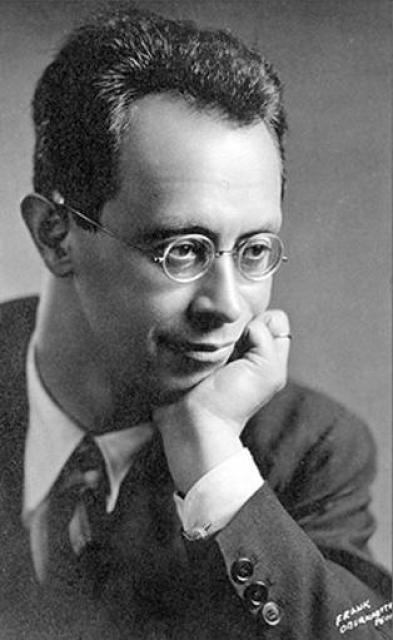
Rudolf Serkin was an American pianist of Czech origin who is considered one of the greatest interpreters of Ludwig van Beethoven's works in the 20th century.
Early Life and Education
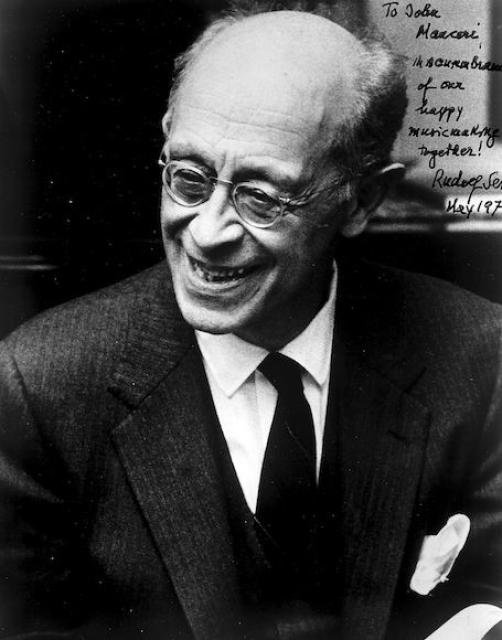
Serkin, born on March 28, 1903, in the Czech city of Cheb, which was then called Eger and part of the Austro-Hungarian Empire, came from a Russian-Jewish family. From a young age, he displayed remarkable talent and was considered a prodigy. At the age of 9, he was sent to Vienna to study piano with Richard Robert and composition with Joseph Marx. By the age of 12, Serkin made his public debut accompanied by the Vienna Philharmonic.
Early Career
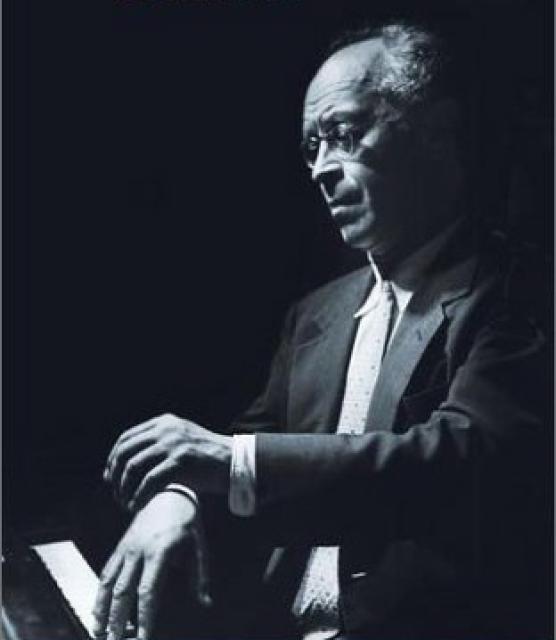
From 1918 to 1920, Serkin studied composition under Arnold Schoenberg and actively participated in the Society for Private Musical Performances founded by Schoenberg. In 1920, Serkin began his regular concert career, performing as a duo with German violinist Adolf Busch. He lived with Busch and his family in Berlin and later married their daughter Irene Busch.
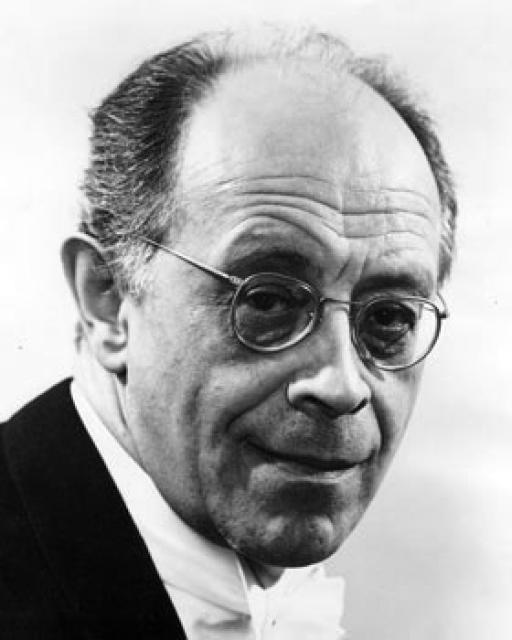
In the 1920s and early 1930s, Serkin toured Europe extensively as a soloist and as a member of Busch's duo and quartet, gaining great success. However, with the rise of Nazi influence, Serkin and Busch, who was against the Nazi regime, left Berlin in 1933 and settled in Basel, Switzerland.
American Career
In 1933, Serkin gave his first concert in the United States at the Coolidge Festival in Washington, D.C., once again accompanied by Adolf Busch. His American solo career began in 1936 with the New York Philharmonic under the direction of Arturo Toscanini. Critically acclaimed for his impressive playing style and technique, Serkin performed his first concert at Carnegie Hall in 1937.
With the outbreak of World War II, Serkin and Busch immigrated to the United States. Serkin then taught several generations of pianists at the Curtis Institute of Music in Philadelphia, where he also served as the head of the Institute from 1968 to 1976. He lived with his growing family in New York and later Philadelphia, spending time on a dairy farm in Guilford, Vermont.
Marlboro Music School
In 1951, Serkin and Busch founded the Marlboro Music School and Festival in Marlboro, Vermont, with the aim of promoting chamber music performance in the United States.
Recordings and Accolades
From the 1940s to the 1980s, Serkin made numerous recordings, including a notable recording of Beethoven's Piano Concerto No. 4 with the NBC Symphony Orchestra conducted by Toscanini in 1944. Most of his recordings were made for Columbia Masterworks, although he also recorded for Deutsche Grammophon and Telarc in the 1980s.
Serkin was an admirer of Max Reger's music and became the first American pianist to record Reger's Piano Concerto, Op. 114, with Eugene Ormandy and the Philadelphia Orchestra in 1959.
In recognition of his contributions to music, Serkin was awarded the Presidential Medal of Freedom in 1936. He celebrated the New York Philharmonic's 100th anniversary in March 1972 by performing Brahms' First Piano Concerto. The orchestra and its board of directors made Serkin an honorary member of the New York Philharmonic-Symphony Society, a distinction previously bestowed upon Aaron Copland, Igor Stravinsky, and Paul Hindemith.
In 1984, Serkin received a Grammy Award, and in 1988, he was honored with the National Medal of Arts. He continued to tour and perform until his illness prevented him from doing so. Serkin passed away on May 8, 1991, at the age of 88, at his farm in Guilford. He was survived by his wife Irene, who outlived him by seven years, and their seven children and fifteen grandchildren.