Rupesh Kumar
 India
India- Young Indian with Progeria: The World's Oldest 'Benjamin Button'
- The Early Signs of Progeria
- The Exploitative Offers
- The Struggle with Progeria
- Seeking Help and Support
Young Indian with Progeria: The World's Oldest 'Benjamin Button'
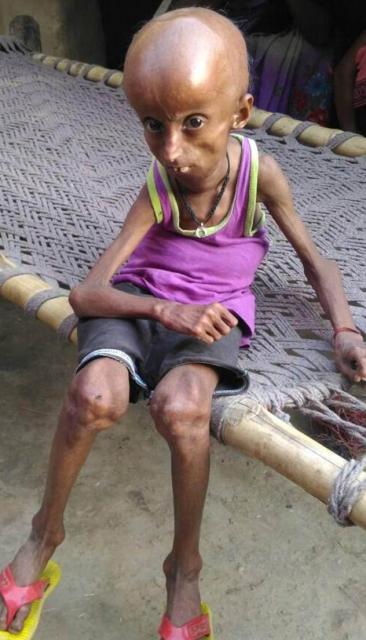
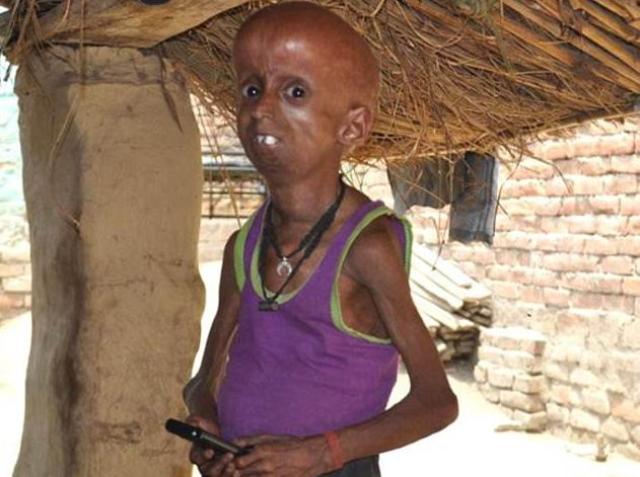
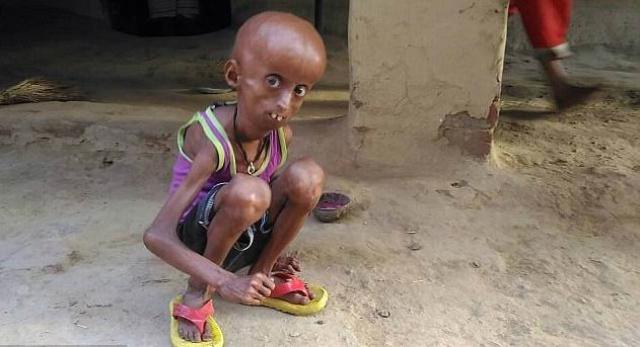
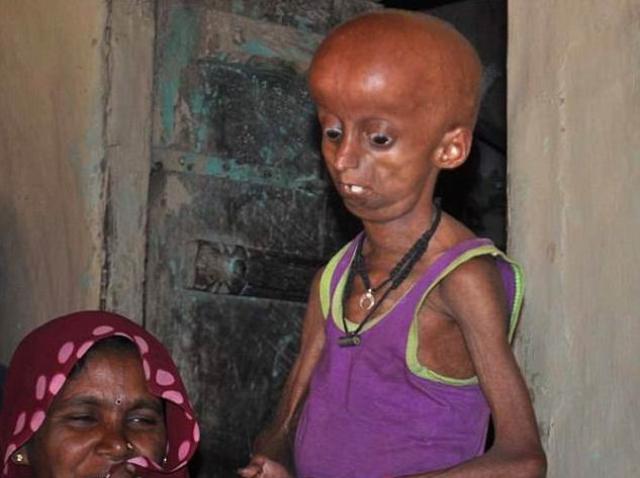
Rupesh Kumar from Hanumanganj, India, suffers from a rare genetic condition called progeria, or Hutchinson-Gilford syndrome, which causes his body to age eight times faster than normal. Despite his condition, Rupesh has become the oldest living person with this extremely rare genetic defect, with his body now equivalent to that of a 160-year-old. The unusual appearance of the young Indian has caused a stir in the community, with some people even suggesting that his parents sell him to the circus. However, Rupesh's family has refused these offers, determined to care for their son themselves.
The Early Signs of Progeria
Rupesh's father, Ramapati Kumar, a 45-year-old agricultural worker, recalls how his son's symptoms first appeared when he was a child. "When Rupesh was little, it all started with frequent headaches and stomach pains," he said. "Several doctors examined Rupesh, but none of them could diagnose him. They only prescribed painkillers and told us to go home." As Rupesh grew, his parents noticed abnormal changes in his body and appearance. "Over time, our son's head became abnormally large, and Rupesh started losing a significant amount of weight," added Ramapati.
The Exploitative Offers
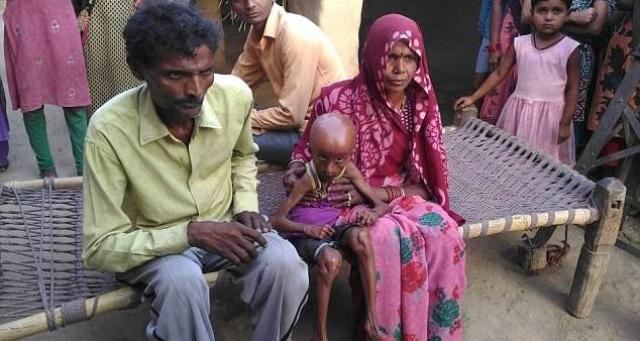
About five years ago, some people came to the village where the Kumar family lives, claiming to offer assistance. Ramapati remembers, "I thought they were good people who wanted to help treat my son." However, he was shocked when they made an inhumane proposal. "They offered to buy my child and use him in a circus act," he said. "They offered us 300,000 rupees (about $4,600). I politely asked them to leave. I will never give away my child, even if someone offers me 10 million rupees (about $156,000)." Rupesh's mother, Shanti Devi, who has become his caregiver, expressed her disbelief at the audacity of these people, saying, "How could these people dare to make such an inhuman offer?"
The Struggle with Progeria
Unfortunately, there is currently no cure for progeria. However, Rupesh has defied all odds and has lived for over 20 years, surpassing the life expectancy of most individuals with this condition. His treating physician, Dr. Yunghatar Padney, explained, "Rupesh has suffered from progeria, for which there is still no known cure. Most progeria patients do not live past the age of 13-15, but in some cases, like Rupesh's, they surpass the age of 21." The symptoms of progeria first appeared in Rupesh when he was just two years old. His growth stopped, hair started to fall out, and his skin became loose and wrinkled. "In addition, the patient's muscles started to lose tone. Like in other cases of progeria, Rupesh's eyes sunk, and his skin became pale," added Dr. Padney. Progeria is a genetic disorder caused by a mutation in a gene called LMNA, which produces a protein that holds cells together. Cellular instability is believed to be responsible for the premature aging. Typical symptoms manifest in affected individuals between 18-24 months of age and include stunted growth, loss of body fat and hair, sagging skin, joint stiffness, and hip dislocations. Progeria patients usually die from cardiovascular disease around the age of 14.
Seeking Help and Support
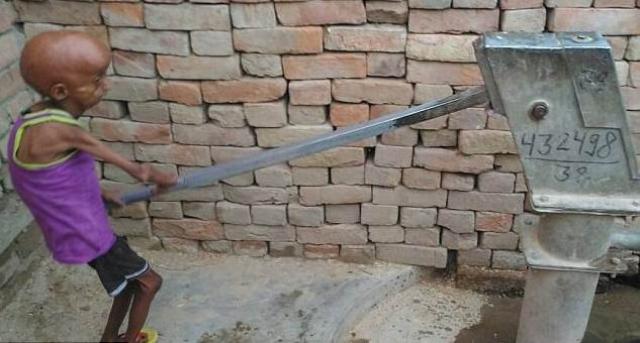
Desperate for assistance, Rupesh's parents have reached out to the Prime Minister of India for help, but a response from the government is yet to be received. Meanwhile, a local non-profit organization, Ashutosh Memorial Trust, is working to ensure that Rupesh receives the necessary medical care and does not go unnoticed. Despite the challenges he faces, Rupesh continues to defy expectations and live life to the fullest, becoming an inspiration to many in his community.