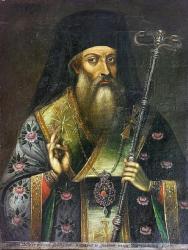
Rutilio Grande
 Salvador
- Rutilio Grande García: A Jesuit Priest and Social Activist
- Early Life and Education
- Priesthood and Academic Career
- Social Activism
- Influence on Óscar Romero
- Preaching and Assassination
- Aftermath and Legacy
Rutilio Grande García: A Jesuit Priest and Social Activist
Rutilio Grande García, a prominent Salvadoran Jesuit priest and social activist, was tragically assassinated in 1977 alongside two other Salvadorans by right-wing paramilitary death squads known as "esquadrones de la muerte." His murder marked a turning point in Salvadoran history, galvanizing the Catholic Church and fueling the civil war.
Early Life and Education
Rutilio Grande García was born into a poor family in El Paisnal on July 5, 1928. Following his parents' separation, he was raised by his elder brother and his devout Catholic grandmother. At the age of 12, he was recognized for his abilities and invited to study at the Seminary of San Salvador.
At 17, Grande completed his studies in the seminary and traveled to Caracas, Venezuela, where he joined the Jesuit order (at that time, there were no Jesuit missions in Central America). Initially, he aspired to serve as a missionary in East Asia, but after two years of novitiate, he took vows of chastity, poverty, and obedience and moved to Quito, Ecuador, to study humanities.
Priesthood and Academic Career
From 1950 to 1953, Grande taught history and literature at the Seminary of Salvador. He then continued his studies at the Seminary of San José de la Montaña in Bogotá, Colombia, where he befriended Óscar Romero, who would later become Archbishop of San Salvador. Grande was ordained a priest in 1959.
In 1963, he furthered his education in Brussels, Belgium, where he was influenced by the emerging ideas of "inclusive liturgy" that sought to simplify church services and encourage greater interaction between the pastor and the congregation.
Social Activism
Upon his return to Salvador in 1965, Grande was appointed Director of the Center for Social Action Projects at the Seminary of San Salvador. He also served as professor of theology and introduced "immersions" among seminarians, who would engage with ordinary parishioners, listen to their concerns, and offer aid.
Grande's innovative methods, however, met with resistance from seminary authorities, leading to the discontinuation of the "immersions." He continued to clash with bishops, advocating for practical pastoral experience over theoretical instruction, but ultimately faced opposition and was removed from his position.
Influence on Óscar Romero
In 1972, Grande attended the Latin American Pastoral Institute, where he finalized his ideological stance. He served as master of ceremonies at Óscar Romero's appointment as Bishop of Santiago de María in 1975 and remained close to him until his death.
Preaching and Assassination
In 1973, Grande returned to Salvador and became involved with a Jesuit mission in Aguilares. His sermons boldly addressed social issues such as income inequality, land reform, workers' rights, and the need to reduce social injustice. He defended the rights of marginalized peasants, earning the ire of wealthy landowners who perceived him as a threat.
On January 28, 1977, Father Mario Bernal Londono, a Colombian priest serving in Salvador, was abducted and later deported by government forces. In response, Grande delivered a historic sermon known as the "Apopa Homily" on February 13.
In it, Grande condemned the expulsion of Father Bernal and denounced the persecution of the Church. He predicted that the government would soon suppress religious expression, echoing the crucifixion of Jesus.
On March 12, 1977, Rutilio Grande García was assassinated by a death squad, becoming a Catholic martyr. The murder is believed to have been carried out by the extreme-right Union of White Warriors, which engaged in a campaign of terror against the Catholic clergy, particularly Jesuits.
Aftermath and Legacy
Grande's assassination sent shockwaves through Salvadoran society and the Catholic Church. It catalyzed the escalating conflict between the state and the Church that culminated in the Salvadoran Civil War. The Church held massive mourning ceremonies, and Grande's death became a symbol of the Church's commitment to social justice.
A film, "Monseñor: The Last Journey of Óscar Romero," and a series, "Romero," depicted Grande's life and the impact of his assassination on the Archbishop. Radio Rutilio, a Salvadoran radio station, was established in 1991 to honor his legacy.