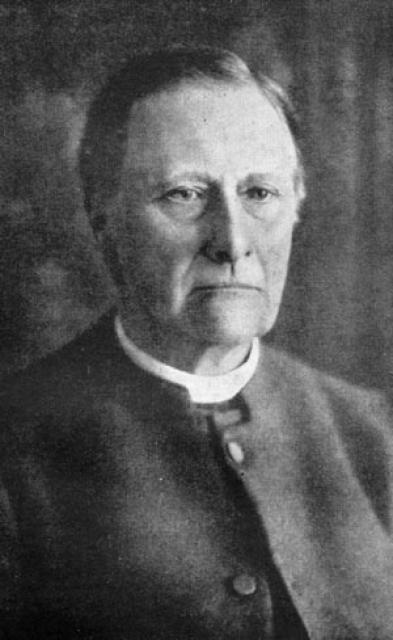
Sabine Baring-Gould
 Great Britain
Biography of Sabine Baring-Gould
Sabine Baring-Gould was an English antiquarian, writer, scholar, and hagiographer. With over 1240 publications to his name, his bibliography continues to grow. He is best known for his hymns, such as "Onward, Christian Soldiers" and "Now the Day Is Over".
Early Life
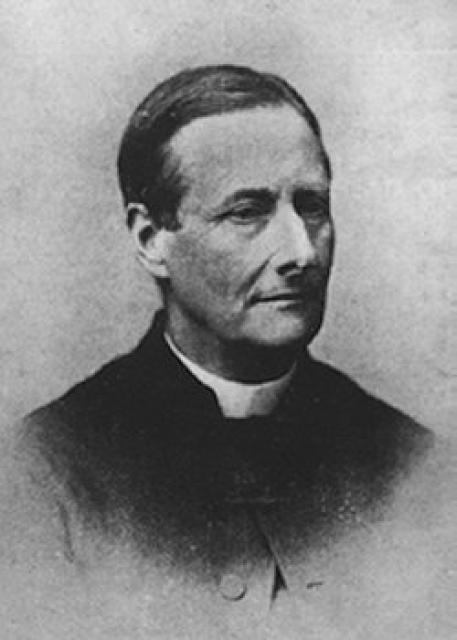
Sabine Baring-Gould was born in St Sidwell, Exeter, as the eldest son of Edward Baring-Gould and his first wife, Sophia Charlotte nee Bond. He was named after his famous uncle, the explorer and polar scientist Edward Sabine. Due to his family's frequent moves, Sabine received most of his education from private tutors and spent only two years in regular schools. His weak health, plagued by bronchial diseases, also contributed to the family's constant relocations.
Educational and Clerical Career
In 1852, Baring-Gould enrolled at Cambridge University and obtained his bachelor's degree in 1857, followed by a master's degree in 1860. In 1864, he became an assistant curate in Horbury Bridge, Yorkshire, where he met Grace Taylor, the 16-year-old daughter of a factory worker. With the help of the parish vicar, Sabine sent Grace to York for two years to refine her manners. They married in 1868 and had 15 children together, with only one not surviving to adulthood. Grace passed away in 1916 and Sabine had the Latin phrase "Dimidium Animae Meae" engraved on her gravestone, which means "Half of My Soul".
Writing and Collecting Folk Songs
In 1871, Baring-Gould moved to East Mersea in Essex, where he served as a parish priest for ten years. In 1880, he inherited 12 square kilometers of family estates in Lew Trenchard, Devon. Alongside his clerical duties, Baring-Gould acted as a landowner and restored the local church. One of his most notable achievements was his collection of folk songs, which he gathered with the help of residents of Devon and Cornwall. His first collection, "Songs and Ballads of the West," was published in 1889 and became the first popular anthology of its kind. The collection was edited by Henry Fleetwood Sheppard. Baring-Gould and Sheppard collaborated again on a second collection, "A Garland of Country Songs," published in 1895. The first collection was reissued in 1905, this time with Cecil Sharp as the editor. In 1907, Baring-Gould and Sharp released "English Folk Songs for Schools," which became a standard textbook for English schoolchildren for the next 60 years.
Notable Works
Baring-Gould's writing career extended beyond folk songs. He authored a 16-volume series called "The Lives of the Saints" and "The Book of Were-Wolves," a groundbreaking analysis of folklore during that time. His work on lycanthropy was considered one of the most accurate pieces on the subject at the time and continues to be of interest today. His two-volume work, "Curious Myths of the Middle Ages," also remains popular and received praise from renowned writer Howard Phillips Lovecraft.
Legacy
Sabine Baring-Gould passed away on January 2, 1924, and was buried alongside his wife. His contributions to literature, folklore, and music continue to be appreciated and studied to this day.