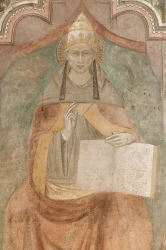
Saint Rosalia
Saint Rosalia is remembered as the solitary young woman whose relics, according to Palermo’s tradition, helped end a devastating plague. Her life belongs partly to history and partly to devotional memory: medieval documents attest that she was venerated by the late 12th century, but the detailed story of her family and retreat into the mountains comes from much later accounts. Today she remains the beloved “Santuzza” of Palermo, whose annual celebrations fill the city with processions, music and pilgrimage.
A Medieval Hermit
Rosalia is believed to have lived in Sicily during the 12th century, when Norman rulers governed the island and Byzantine and Western monastic traditions flourished. Her exact birth and death dates are not known. Local tradition places her birth around 1130 and her death around 1170, and identifies her as the daughter of a nobleman named Sinibald. The Palermo cathedral’s historical account notes, however, that the inscription naming her parents was found only in 1624 and has long been considered doubtful.
According to the stories told about her, Rosalia rejected a planned marriage and chose a life of prayer and solitude. She is said to have spent time in a Basilian religious community before living as a hermit in caves near Santo Stefano Quisquina and on Monte Pellegrino, overlooking Palermo. Her withdrawal echoed a broader spiritual movement of the period, when hermits sought a life apart from courtly privilege and public ambition.
The details of her life are difficult to verify. The earliest surviving narrative about Rosalia was written centuries after the period in which she is believed to have lived, but records show that churches were dedicated to her by the 13th century. Documents from 1196–1198 refer to her as a saint, indicating that a local cult had taken root well before the dramatic rediscovery of her relics.
The Plague and the Relics
In 1624, as plague ravaged Palermo, a woman named Girolama La Gattuta reported a vision of Rosalia and directed people to a cave on Monte Pellegrino. Human bones were found there on 15 July. Church authorities investigated whether they could be Rosalia’s remains, and the discovery quickly became a focus of hope for a city living through epidemic and fear.
The following year, another vision was reported, this time by Vincenzo Bonello. In June 1625, Rosalia’s relics were carried through Palermo in a solemn procession. The epidemic subsequently receded and was declared over in July. Palermo’s civic and religious leaders credited the saint’s intercession with the city’s deliverance, and the Senate proclaimed her its principal patron. This account is central to the city’s religious memory; it describes the meaning believers found in the procession, while the end of an epidemic cannot be independently attributed to a miracle as a historical cause.
Palermo’s “Santuzza”
Rosalia’s feast day is 4 September, while Palermo’s major celebration, the Festino, takes place in July and commemorates the procession of the relics. The city carries a richly decorated ceremonial float through its streets, and pilgrims also climb Monte Pellegrino to visit the sanctuary built at the cave associated with her life.
Her relics are kept in Palermo Cathedral in an ornate silver reliquary. The contrast between the secluded hermit of the medieval stories and the vivid public festival that grew around her is part of Rosalia’s enduring appeal. For Palermo, she is both a figure of prayer and a civic protector whose story links a present-day city to its most frightening hours.
Rosalia’s legacy rests on this bond between devotion and place. Generations of Palermitans have turned to her in times of danger, carried her image through the streets and made her mountain shrine a destination for pilgrims. Whether approached as a saint, a historical hermit or the central figure in Palermo’s plague tradition, she remains one of Sicily’s most recognizable symbols of faith and communal identity.