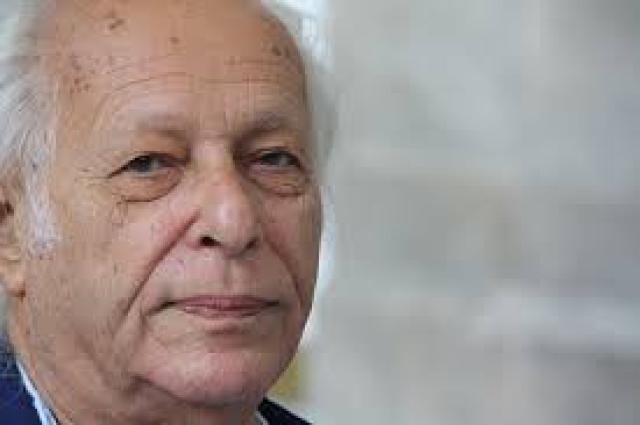
Samir Amin
 Egypt
EgyptBiography of Samir Amin
Samir Amin was a French-speaking Egyptian political scientist and economist, a researcher of globalization, one of the theorists of neo-Marxism, and a founder of the world-system approach. He was born in Cairo to a family of Egyptian and French doctors. He spent his childhood and youth in Port Said. In Cairo, Amin attended a French high school and graduated with a bachelor's degree in 1947. From 1947 to 1957, he studied in Paris, where he obtained diplomas in political science (1952), statistics (1956), and economics (1957). While in Paris, Samir Amin joined the French Communist Party, but later distanced himself from the overly orthodox Soviet Marxism and became involved with Maoist circles, and for some time even influenced future leaders of the "Khmer Rouge". Along with a group of student comrades, Amin published the journal "Étudiants Anticolonialistes" ("Anticolonial Students"). In 1957, he presented his dissertation, one of the scientific supervisors of which was François Perroux. Initially, it was titled "The Origins of Underdevelopment - Capitalist Accumulation on a Global Scale", but later it was renamed as follows: "Structural Effects of International Integration of Pre-capitalist Economies: A Theoretical Study of the Mechanism Generating So-called Underdeveloped Economies". After defending his dissertation, Amin returned to Cairo, where from 1957 to 1960 he collaborated with the Ministry of Economy of Egypt and served as a manager at Études de l'Organisme de Développement Économique. He then left Egypt and traveled to Bamako, where he was offered a position as an advisor to the Ministry of Planning of Mali, which Amin held from 1960 to 1963. From 1963 to 1980, he worked at the African Institute for Economic Development and Planning (IDEP), headquartered in Dakar, Senegal. Until 1970, he combined this work with teaching at universities in Poitiers, Dakar, and Paris. In 1970, Amin became the director of IDEP and stayed in this position until 1980, when he left the institution and was invited to be the director of the Third World Forum in Dakar. Currently, he is the director of the Third World Forum (Dakar) and a member of the editorial board of the journal "Review of International Political Economy". Samir Amin is the author of more than 30 books, including "Imperialism and Unequal Development", "The Liberal Virus: Permanent War and the Americanization of the World", "Eurocentrism", "The Specter of Capitalism: A Critique of Current Intellectual Trends", and "Obsolete Capitalism: Contemporary Politics and Global Disorder". In these works, Amin consistently criticizes global capitalism, which exploits peripheral countries without limits, protests against the dehumanizing influence of the market that atomizes society and weakens solidarity among people, and refers to capitalism as a "retreat" rather than the end of history. Analyzing the "Triad" of the capitalist world-system (the USA, the European Union, and Japan), Amin concludes that there are no significant economic contradictions within the "Triad", which are compensated by differences in political culture. He explains the dominance of this center by its monopolistic control over advanced technologies, weapons of mass destruction, modern means of communication, etc. The main obstacle for developing countries is their lack of competitiveness, especially in the struggle for investment. The desired outcome can only be achieved through greater or lesser autonomy from the global centers. Amin refers to this as "de-linking", which can be translated as disconnection or rupture. As an example, the Soviet Union can be considered, as it isolated itself from the capitalist world-system with the "Iron Curtain". Another example is South Korea, where there was no overwhelming influence of state ownership, but large corporations, known as "chaebols", played the same role as the state in the Soviet Union. Critics of Amin, both liberals and Marxists, usually note that countries that attempted de-linking faced a contradiction: they either had to agree to disconnect from the world system, which led to isolation and stagnation, or open up their economy, which increased external exploitation of the country. Amin is also interested in ideological concepts. According to him, the division of the concepts of "freedom" and "equality", characteristic of the American tradition (in contrast to the European tradition based on the legacy of the French Revolution), determines the key danger of Americanization. Therefore, he opposes American hegemony with an alliance of Europe, China, and Russia.