Samuel Granovsky
 France
- Early Life and Artistic Beginnings
- Paris, the Dada Movement, and the "Hive"
- The "Cowboy of Montparnasse"
- Financial Struggles and Side Hustles
- Tragic End
Early Life and Artistic Beginnings
Born in Yekaterinoslav, Russia, to a Jewish family, Haim Granovsky attended the Odessa Art School from 1901. After briefly serving in the military during the Russo-Japanese War, he continued his artistic education in Munich in 1908.
Paris, the Dada Movement, and the "Hive"
In 1909, Granovsky moved to Paris and immersed himself in the art scene. He became associated with Dadaism and contributed as a set designer for Tristan Tzara's play "Cœur à gaz" (1923). As a sculptor, he created frescoes and paintings, decorated furniture and screens, and exhibited at the Salon des Indépendants.
The "Cowboy of Montparnasse"
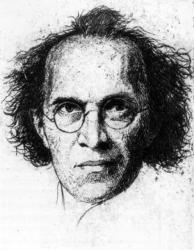
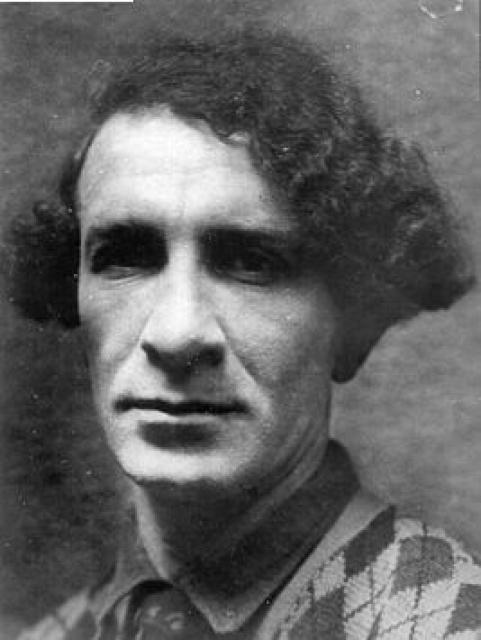
With his distinctive appearance and charisma, Granovsky became a sought-after model. His trademark attire—a colorful plaid shirt and a Texas hat—earned him the nickname "the Cowboy of Montparnasse." He became a familiar sight on the streets of Paris.
Financial Struggles and Side Hustles
Despite his artistic endeavors, financial instability plagued Granovsky. To supplement his income, he worked as a cleaner at the iconic Café Rotonde.
Tragic End
On July 17, 1942, Granovsky was arrested by the Nazis during a roundup in occupied Paris. He was interned at the Drancy concentration camp and deported on July 22, 1942. Ultimately, he perished in Auschwitz.