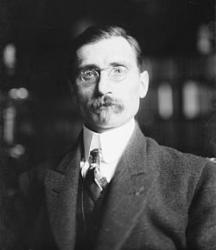
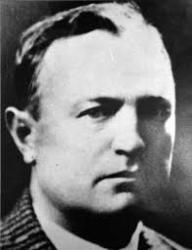
Sandor Petofi
 Hungary
Biography of Sándor Petőfi
Sándor Petőfi (1823-1849) was a Hungarian poet, national poet of Hungary, revolutionary democrat, and one of the leaders of the Hungarian Revolution of 1848-1849.
Early Life and Career
Petőfi's father, who was of Serbian descent, worked as a village butcher, while his mother, of Slovak origin, worked as a domestic servant in her youth. As a young boy, Petőfi abandoned school and joined a traveling theater troupe, which toured throughout the country. However, he soon became disillusioned with the provincial acting lifestyle and decided to join the military. The life of a soldier did not suit the seventeen-year-old Petőfi either, and he attempted to continue his education, but his rebellious nature made it difficult for him to conform to the discipline of the time.
After unsuccessful attempts to become an actor again, Petőfi discovered his calling in poetry. He continued to pursue his education, learning German, French, and English. He also translated foreign novels and eventually became one of the best Hungarian translators of Shakespeare. Petőfi avidly studied the history of the French Revolution and the works of utopian writers. In 1844, the renowned Hungarian poet, Mihály Vörösmarty, recognized Petőfi's immense talent and published a collection of his poems. Petőfi's songs spread throughout the country, and his "Travel Sketches," describing various regions of Hungary, became widely read, reminiscent of Heinrich Heine's "Reisebilder."
Revolutionary Activities
The revolution of 1848 provided a significant impetus for Petőfi's literary and political activities. In Hungary, the bourgeois revolution was closely intertwined with the national liberation struggle against Austria's semi-colonial exploitation. This struggle was both national, as Hungary sought independence from Austria, and democratic, as it aimed to overcome the remnants of feudalism that hindered capitalist development. The literature that served these goals was expected to be national and popular, expressing the aspirations of broad societal layers such as the oppositional bourgeoisie and peasantry. Petőfi seemed destined to become the leader of this new movement. His poetry became a powerful weapon, earning him unprecedented popularity while simultaneously putting him at odds with conservative elements in both literature and politics.
Under Petőfi's leadership, the revolutionary youth of Budapest stormed the city on March 15, 1848, and won freedom of the press. The first publication from the captured printing press was his "National Song." Petőfi sought to intensify the revolutionary fervor. He was a revolutionary plebeian who despised any form of compromise, and he criticized Kossuth's insincere policies towards the exploited peasantry and the working class. Petőfi's poems increasingly expressed his hatred and anger towards the monarchy and the feudal system. He demanded a republic and called for the execution of the royal government in his impassioned verses.
Death and Legacy
When the Russian czarist regime suppressed the Hungarian revolution, Petőfi's life was cut short in battle at Segesvár on July 31, 1849. He was not yet 27 years old. Petőfi had foreseen such a death in his poems. His poetry had a political orientation that aligned him with Beranger, Heine, Herwegh, and Freiligrath. Petőfi championed Beranger's poetry, valuing its radical and plebeian essence. Although he occasionally translated Beranger's works, Petőfi surpassed him in his genuine pathos and versatility. He may have been more primitive than Heine, but he was also more sincere, fresh, and optimistic. Petőfi regarded Herwegh and Freiligrath in the same way the Hungarian revolution of 1848 regarded the German revolution – he considered himself greater than both. A comparison can also be drawn between Petőfi and Nekrasov, as they shared similar social themes and rhetorical intonations, typical of both revolutionary-democratic poets. Such a comparison would be valid if we consider the socio-historical differences between pre-March Hungary and Nekrasov's Russia, as well as Petőfi's lack of association with the nobility and their culture. Moreover, Petőfi's brief life encompassed the richness of ideas and the legacy of the Great French Revolution, reflecting all the ideological content of Europe at that time. He was perhaps the most philosophical and comprehensive poet among all the bourgeois-democratic revolutionaries and undoubtedly the most uncompromising.
While official historiography often portrays Sándor Petőfi primarily as a poet of love, a singer of family sentiments, and a virtuoso of landscape art, he was much more than that. His passionate love poetry, idyllic immediacy, heartfelt humor in poems dedicated to parents and friends, and the exquisite descriptions of nature all have an irresistible effect on the reader. However, this is only one facet of Petőfi's multifaceted talent. In addition to his epic poetry, he wrote elegies, rhapsodies, odes, and satires. He composed numerous epigrams, songs, and small narrative poems, utilizing various poetic genres and forms, whether in Hungarian meters or in classical or Western European verse. Notably, Petőfi's poems often feature a sharp and unexpected ending, known as a "pointe." His poetic thinking is realistic throughout, avoiding worn-out metaphors and images. Instead, his poetry remains fresh and deeply rooted in his close connection to nature and the peasant masses. From childhood, Petőfi experienced and identified with the life and thoughts of the poor, particularly the peasantry, providing his poetry with a clear, almost materialistic foundation. As a radical intellectual, he demanded accelerated economic and cultural development for the country, including capitalist transformation, urbanization, and civilization. However, he maintained a strong bond with the impoverished peasantry from which he emerged. When he made the "voice of the people" resonate in his poems, he did not need to disguise or condescend – it was his own voice, but simultaneously, it represented a new tone in Hungarian literature, one of lyrical immediacy, simplicity, and populism. Contrary to the claims of reactionary Hungarian historians, Petőfi was primarily a political poet, a poet of revolutionary democracy. He represented the faction of the revolutionary intelligentsia closely connected to the peasantry. During the revolution, he fought for the continuation of the revolutionary war, for the expansion of the peasant revolution, and for the Jacobin method of revolutionary struggle. Petőfi sealed his loyalty to the traditions of the Great French Revolution with his untimely heroic death.