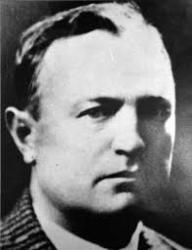
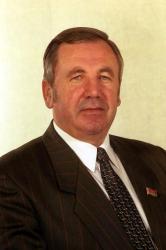
Goran Hadzic
 Croatia
Biography of Goran Hadzic
Former leader of the Republic of Serbian Krajina, Goran Hadzic, has been arrested in Serbia. He is the last indicted individual sought by the International Criminal Tribunal for the former Yugoslavia for war crimes committed during the Balkan wars. Hadzic led the unrecognized Serbian state of Republic of Serbian Krajina, which existed in Croatia from 1991 to 1995. The Serbian court has decided to extradite him to The Hague. According to Serbian President Boris Tadic, who called a special press conference for this purpose, Goran Hadzic was arrested on the morning of July 20 in the north of the country. According to a Serbian prosecutor involved in the investigation of war crimes (as quoted by Agence France-Presse), Hadzic was armed but did not resist arrest. According to Serbian law enforcement agencies, he was planning to flee the country. The person who provided Hadzic with money for the trip has also been arrested. It is known that Hadzic was living under a false identity and was difficult to recognize. The breakthrough in the search came when Hadzic, left without money, tried to sell a painting by Italian artist Amedeo Modigliani. It is believed that he obtained the painting during the war in Croatia. According to AFP, the painting was discovered in December 2010 in the house of a person who allegedly assisted Hadzic. In December, it was reported that a search was conducted in Novi Sad in the house of Zoran Mandic, where a photograph of the painting was found (the value of the unnamed canvas was estimated at over a million euros). The day before the arrest, on July 19, there was information that the Serbian authorities were negotiating Hadzic's surrender to the Hague Tribunal. The news of the arrest was supposed to be announced on July 18 during a meeting between Tadic and the presidents of Croatia and Bosnia and Herzegovina, but the issue was not resolved by that time. According to this information, voluntary surrender was supposed to prevent possible unrest.
The United States offered a reward of five million dollars for information on Hadzic, while the Serbian authorities promised 1.4 million. It is unclear whether anyone will receive this money. Hadzic was accused of persecution on political, racial, and religious grounds, as well as deportations, torture, involvement in killings, and other crimes (a total of 14 charges) in 2004. According to the indictment, Hadzic committed these crimes between 1991 and 1993 in order to force the non-Serb population, primarily Croats, to leave the part of Croatia where the Serbian Krajina was proclaimed (the city of Knin became the center of the unrecognized republic). In particular, Hadzic is suspected of involvement in the murder of more than 250 people near the city of Vukovar in November 1991. President of Yugoslavia, Slobodan Milosevic, who sought to support the Serbs living there, was also accused of crimes in Croatia.
The significance of Hadzic's arrest is evident - the last suspect sought by the tribunal for war crimes has been found and will apparently be handed over to The Hague. "Thus, Serbia has completed the most difficult chapter in its cooperation with the Hague Tribunal," emphasized Tadic. Until now, there were suspicions that Hadzic was being protected by Serbian intelligence services, indicating that part of the Serbian elite had not reconciled with the defeats of the 1990s. These suspicions are now dispelled. While some in Serbia may still sympathize with nationalist causes, the state has definitively turned away from them.
Speculation arose that Hadzic may have been hiding outside of Serbia, possibly in Belarus. The fact that he was found in Serbia, on the one hand, certainly casts a shadow on the local authorities. However, on the other hand, the victory of the pro-European establishment in the Serbian leadership appears more convincing in such a case - the resistance of Serbian nationalists within the ruling structures, if it existed, has been finally broken. In a joint statement, the President of the European Commission, Jose Manuel Barroso, the President of the European Council, Herman Van Rompuy, and the High Representative of the EU for Foreign Affairs and Security Policy, Catherine Ashton, welcomed Hadzic's arrest. They said what Belgrade undoubtedly wanted to hear - the arrest is a "significant step for Serbia in pursuing its European perspective." In other words, Hadzic's capture will indeed serve as a strong argument for the Serbian authorities in negotiations for the country's accession to the EU.
It is worth noting that Hadzic's arrest was also welcomed by NATO. According to NATO Secretary-General Anders Fogh Rasmussen, it will close "the heaviest chapter in recent European history." Responding to the question of why it took so long to apprehend Hadzic (he went into hiding shortly after the charges were filed in 2004), Tadic reminded people of the time it took to eliminate Osama bin Laden. According to Tadic, the Serbian authorities worked diligently and methodically. This comparison is likely intended to underscore Serbia's closeness to the West.
Belgrade has been working towards a final reconciliation with its neighbors in the region for many years now. Hadzic's arrest comes less than two months after the capture of former commander of the Army of the Republic of Serbian Bosnian, Ratko Mladic, who fought in Bosnia. At the end of March 2010, the Serbian parliament adopted a resolution condemning the killing of Bosnian Muslims in Srebrenica in 1995. Former leader of the Bosnian Serbs, Radovan Karadzic, was captured in 2008. It is unlikely that the country will change this course.