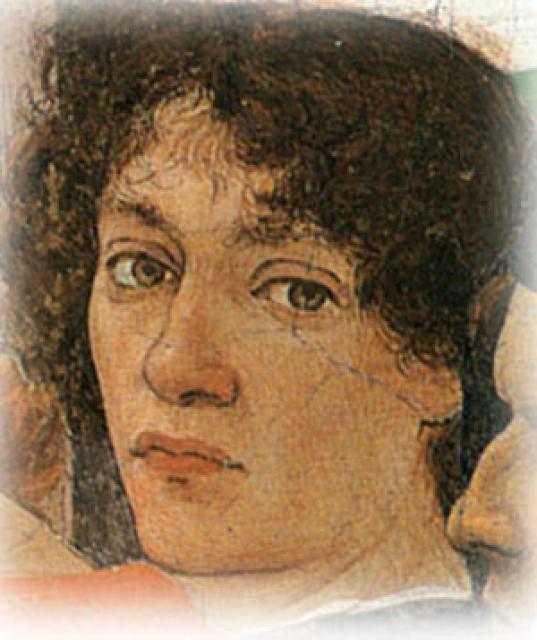
Sandro Bottichelli
 Italy
ItalySandro Botticelli: A Biography
Sandro Botticelli, born Alessandro di Mariano di Vanni Filipepi, was a renowned Italian painter and a prominent figure of the Florentine school of painting. He was born in Florence in 1445 to Mariano di Vanni Filipepi, a tanner, and his wife Zemerlada. Botticelli was the youngest of four sons and grew up in the Santa Maria Novella neighborhood.
At a young age, Botticelli showed a talent for drawing and painting, and his father sent him to study with a jeweler. However, Botticelli's true passion lied in painting, and he soon joined the workshop of Fra Filippo Lippi, a renowned painter of the time. Under Lippi's guidance, Botticelli honed his skills and developed his own unique style.
In 1467, Botticelli left Lippi's workshop and established his own studio. He quickly gained recognition and started receiving commissions for various artworks. His early works, such as "Madonna with Child and Angels," showcased his mastery of composition and poetic imagery.
In 1470, Botticelli joined the Guild of Saint Luke, an association of artists, which allowed him to work independently and expand his artistic pursuits. He began experimenting with different mediums, including tempera, frescoes, and book illustrations.
Botticelli's talent was soon noticed by the influential Medici family, who became his patrons. He created several portraits for the Medici family, including those of Lorenzo and Giuliano de' Medici. These portraits, along with his depictions of conspirators on the walls of the Palazzo della Signoria, solidified his reputation as a skilled painter.
Between 1475 and 1482, Botticelli painted two of his most famous works, "Primavera" (Spring) and "The Birth of Venus." These paintings were commissioned by the Medici family and reflected the cultural atmosphere of the Medici circle, which was influenced by the ideas of philosopher Marsilio Ficino. The works combined classical mythology with Christian symbolism and showcased Botticelli's mastery of composition and emotional expression.
Despite his success, Botticelli faced challenges later in his career. The political landscape in Florence changed, and the Medici family fell out of power. Botticelli's patrons diminished, and his popularity declined. He continued to paint, but his later works were less well-received.
Sandro Botticelli died in Florence in 1510, leaving behind a legacy of exceptional artistic achievements. His works continue to be celebrated for their beauty, symbolism, and contribution to the Renaissance art movement. Botticelli's unique style and poetic imagery have left an indelible mark on the world of art.


