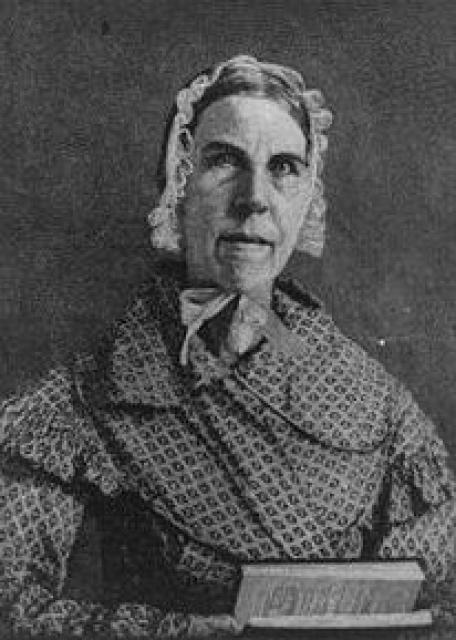
Sarah Grimke
 USA
USABiography of Sarah Grimké
Sarah Grimké was an American writer, suffragist, and abolitionist. Born in South Carolina, she was the sixth of 14 children and the second daughter of Mary and John Faucheraud Grimké. Her father was a plantation owner and judge. From a young age, Sarah showed signs of being a feminist and abolitionist, largely due to her education. She received limited education from private tutors, who only taught subjects considered appropriate for young girls at the time.
Sarah's mother, Mary Grimké, was not just a homemaker, although she excelled in that role. In her free time, Mary actively participated in the activities of the local church, helped the poor, and cared for incarcerated women. Unfortunately, Sarah did not receive the same attention from her mother as her brother Thomas did. This lack of maternal attention led Sarah to develop a close friendship with young slaves, although this friendship did not end well. Sarah wanted to teach her new friends how to read, and the slaves themselves were eager to learn. However, her parents believed that literacy would make slaves unhappy, rebellious, and possibly worse workers. Moreover, in South Carolina, it was illegal to teach slaves to read, a law that was passed in 1740. Sarah did manage to teach her personal slave to read, but when her parents found out, their anger was incredible, especially towards the young African girl. Sarah quickly realized the consequences of her actions and did not attempt to teach other slaves to read, as it would put them at risk.
Thomas Grimké went to Yale to study law, and during his visits home, he shared his acquired knowledge with his sister. The stories about the importance of religion and the dangers of education proved useful to Sarah in her further pursuits. She continued to demonstrate exceptional abilities, and even her father had to admit that only her gender prevented her from becoming the greatest lawyer in the country.
By that time, Sarah had already realized that the situation of slaves in the country needed to change. She planned to use religion, which was supposed to help those in need, as her main tool. In 1819, Sarah's father passed away, which turned out to be beneficial for her as it made her more independent and confident. In Philadelphia, where John Grimké traveled before his death, Sarah met Israel Morris, who introduced her to the Quakers and their religion. Sarah considered abandoning her own faith and becoming a Quaker minister. However, men refused to accept her in this role.
In the spring of 1827, Sarah was able to convert her sister Angelina to the Quaker faith, and they traveled and preached together. The speeches of the Grimké sisters focused on civil rather than religious issues, discussing women's rights and the emancipation of slaves. In 1868, Sarah discovered that one of her older brothers had three children with his personal slave. Grimké welcomed her nephews into her family and made sure they received a proper education.
The fight against slavery was always of utmost importance to Sarah and Angelina, as they came from a slave-owning family and understood the hardships slaves endured. However, finding understanding, even among their fellow Quakers, was challenging. Nevertheless, the sisters never lost faith in themselves. In 1836, Sarah published "Epistle to the Clergy of the Southern States," and a year later, her work "Letters on the Equality of the Sexes and the Condition of Women" was printed in "The Spectator," a Massachusetts newspaper. Her letters were soon republished in "The Liberator," one of the leading abolitionist and feminist publications in the country. In this work, Grimké aimed to open society's eyes to the subordinate position of women, regardless of their social status or abilities. Sarah and Angelina tried for a long time to convince their fellow Quakers to support their cause but eventually realized that religion would not be a worthy ally for feminists and abolitionists in the country. Grimké understood that she needed to seek audiences elsewhere and turned her focus from preaching to public speaking.
In 1836, Sarah joined the American Anti-Slavery Society. Initially, she believed she had finally found true friends, but unfortunately, she was disappointed once again. The members of the society gladly discussed the abolition of slavery but did not want to hear about women's rights. In 1838, Angelina married Theodore Weld, a prominent abolitionist and critic of feminism. The responsibilities of married life forced Angelina to leave her sister alone in her fight against the world. Sarah also reduced the intensity of her feminist speeches but continued to actively fight against slavery. During the Civil War, Grimké frequently spoke in support of Abraham Lincoln.