
Sarah Ivens
 Great Britain
- Sarah Evans - A Journey to Motherhood
- A Delayed Decision
- The Struggle
- Positive Thinking and Biological Realities
- The Importance of Genetic Factors
- A Heartbreaking Decision
- Surrounded by Different Stories
- The Psychological Aspect
Sarah Evans - A Journey to Motherhood
Sarah Evans, a British journalist, had always feared unwanted pregnancies, considering it a nightmare and a hindrance to her career. She postponed having her own child until it seemed too late. It was only then that she realized she had been pursuing something she did not truly want. After 15 years of fear and hesitation, Sarah's perspective on pregnancy changed. She was now willing to go to great lengths to conceive. However, fate seemed to have other plans, as it did not happen as quickly as she had hoped.

A Delayed Decision
Sarah and her husband, Russell, had postponed having children for a long time. However, they reached a point where they realized there was no reason to wait any longer. Russell embraced the idea of becoming a father, and their financial situation was stable. Sarah was tired from her demanding job as an editor for a New York publication. She was ready to leave work behind and focus on her family, but it turned out to be more challenging than expected.

The Struggle
After 11 months of unsuccessful attempts to conceive, Sarah experienced stress comparable to the pressure she faced at work. She was overwhelmed with fear and depression, unable to believe her body was not cooperating. Each month, she anxiously awaited her period, worrying that she had started trying too late. Memories of her past desires, such as her career, travels, and the perfect wedding, no longer brought her joy. Sarah even began to fear that the child she had delayed having might now be lost forever.
Positive Thinking and Biological Realities
Sarah had previously read stories about celebrities successfully conceiving and giving birth in their 40s, making it seem like a simple and effortless process. However, she learned that positive thinking alone might not be enough. She realized that overcoming biological obstacles required more than just self-belief. Sarah's experience was not unique, as the modern lifestyle often misleads women into postponing motherhood until it is too late. This delay can lead to health issues that would have been avoidable with earlier attempts at conception.
The Importance of Genetic Factors
One of the most crucial pieces of advice Sarah received was from Zita West, a pregnancy expert. West emphasized the significance of menopause timing, which has a genetic component. If a mother experienced early menopause, it is highly likely her daughter will also face premature fertility loss. After many unsuccessful attempts, Sarah finally succeeded in conceiving. However, her joy was short-lived when it became apparent that more challenges lay ahead.
A Heartbreaking Decision
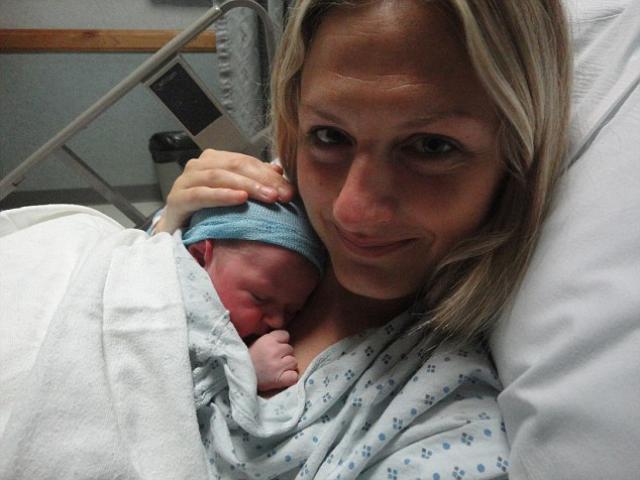
At the 13th week of pregnancy, a heartbreaking diagnosis was made – the unborn child had serious chromosomal abnormalities and almost no chance of survival. The doctors recommended that Sarah undergo an abortion to preserve her ability to conceive again and maintain her mental well-being. As cruel as it sounded, Sarah acknowledged the logic behind their advice. She not only had to consider the potential harm to her own health but also the practicality of wasting time unnecessarily.
Surrounded by Different Stories
Sarah's acquaintances had their own stories to share. One had already spent a considerable amount of money on fertility treatments, while another focused on her career and planned to start trying to conceive in her late 30s. A third friend managed to get pregnant just before turning 40, but her happy event coincided with a difficult family crisis. Her husband felt useless and even threatened suicide if the child was born. She chose to have an abortion, only to later discover that this sacrifice couldn't prevent the failed suicide attempt.
The Psychological Aspect
Many women, including Sarah's peers, often adopt an ostrich-like approach, ignoring potential issues and assuring themselves and others that they can easily find a sperm donor if needed. Zita West explains that conception difficulties can be influenced not only by physiological factors but also by a woman's psychological state. Often, women decide they are ready for pregnancy abruptly, while their subconscious mind struggles to adapt after years of fear and anxiety. This internal conflict further hinders the conception process.


